
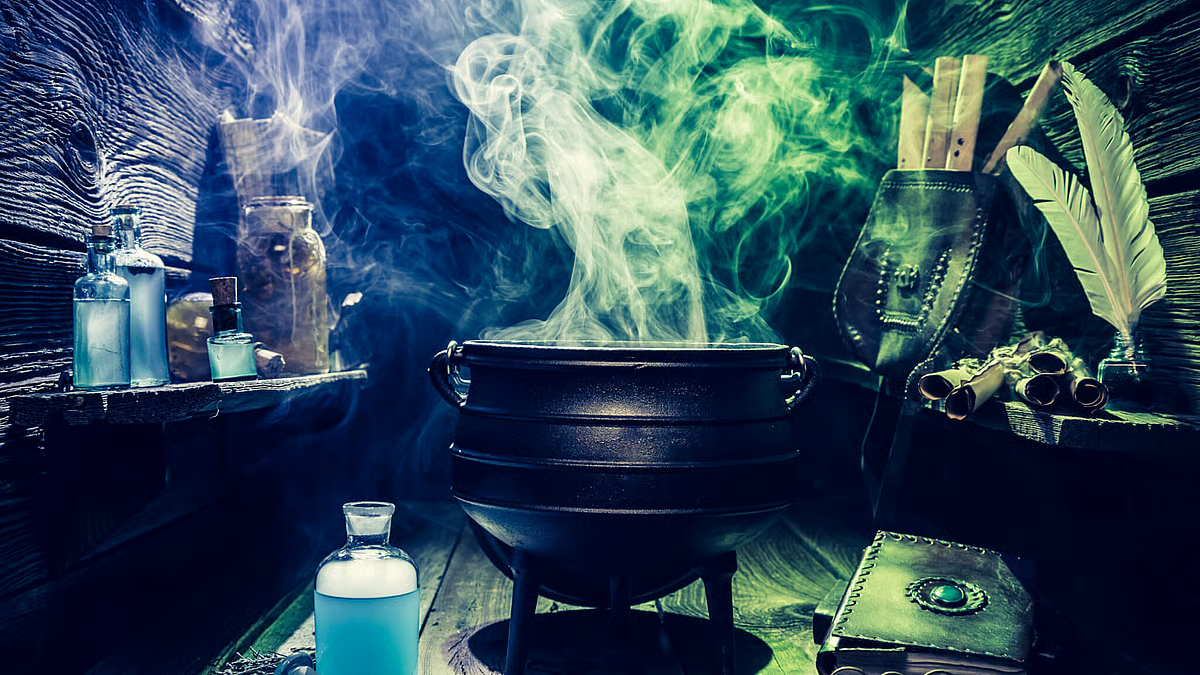
As pop culture continues to include stories of mysterious and mystical fantasy, the idea of reaching beyond the mundane world of human limits and into worlds of magic has become even more compelling.
Whether it’s learning about the history of real potions that have been used for medicinal and healing purposes, or taking a more light-hearted fictional approach, National Brew a Potion Day offers a fun and interesting challenge.
Get into the spirit of brewing up unique concoctions and celebrate the positive effects of creativity – because it’s National Brew a Potion Day!
History of Brew a Potion Day
Often considered a part of the practice of witchcraft, the creation of magical potions has been around for centuries.
Since ancient times, certain people who often live on the edges of society have been paying keen attention to the plants, herbs, seeds and other parts of nature which might be combined to create a substance for healing.
Of course, potions haven’t always been used for healing. For those with more nefarious plans, stories of potions can bring about negative consequences such as illness, or even death.
To see potions at work in fiction, all a person has to do is reach into common fairy tales to consider magical spells and potions that have been used!
For instance, a shrinking potion such as the one in Alice in Wonderland. Or producing a keen sense of youth and vitality, such as in the musical fairy tale mashup, Into the Woods.
Or perhaps it’s the potion that was used to turn someone green, like in the Wizard of Oz backstory tale, Wicked: The Life and Times of the Wicked Witch of the West.
Whatever the motivation, whether for good or evil, mixing up potions comes with a history that has often been criticized and feared.
The celebration of Brew a Potion Day looks at the lighter side of creating and brewing these interesting, unique and sometimes even magical concoctions.
Brew a Potion Day Timeline
Ancient Times
Origins of Herbal Medicine
Herbal medicine dates back to ancient civilizations, where plants were used for healing and ritualistic purposes.
These practices laid the groundwork for potion-making traditions, blending botany and mysticism.
1300s
Apothecaries and Medicine
In the 13th century, apothecaries emerged as key providers of medicinal remedies, including herbal potions, paving the way for modern pharmacy practices.
Middle Ages
Medieval Potions and Herbal Lore
During the Middle Ages, concoctions, often using potent herbs like nightshades, were popular in European healing practices, some believed to have magical properties.
16th Century
Alchemy and Elixirs
The Renaissance era saw alchemists explore the mystical conversion of substances, with pursuits such as the creation of elixirs, believed to grant life-extending properties.
19th Century
Scientific Advances in Medicine
The 19th century marked a period where pharmacology began to emerge from mystical origins, evolving into the science-based practice that propelled modern medicine.
How to Celebrate Brew a Potion Day
Consider some of these ideas for enjoying and celebrating Brew a Potion Day:
Throw a Brew a Potion Day Party
Gather friends together and celebrate the fun of fantasy and magic by hosting a party in honor of the day. Invite guests to dress up as their favorite magical character or fantasy creature.
Then, consider imaginative potions that can be made with ingredients such as fairy dust or magic powder – such as love potions, kindness potions or bravery potions.
Or, for those who are trying to be a bit more practical, perhaps gather some earthly ingredients such as lavender and chamomile essential oils and create a delicious smelling sleep ‘potion’ to be used at bedtime.
Whatever the result, it’s all in good fun!
Read Some Fairy Tales on Brew a Potion Day
Whether it’s reading them to a favorite child or just enjoying them personally, Brew a Potion Day is a great time to reach back and read some classic fantasy novels or fairy tales that include potions.
Consider the above-mentionedAlice in Wonderland, or jump into the Harry Potter stories that feature all sorts of creative potions and magic.
Facts About Brew a Potion
The Herbal Knowledge of Medieval Monasteries
Medieval monasteries were central to medicinal potion crafting, where monks cultivated and processed plants like henbane and rosemary for their therapeutic properties.
These herbal potions significantly influenced medieval health care practices by enhancing the treatment of various ailments.
Ancient Psychoactive Potions in Greece
The Eleusinian Mysteries of ancient Greece incorporated a psychoactive brew known as kykeon, believed to contain barley infected with ergot, a substance with hallucinogenic effects. This potion was integral to the religious rituals and spiritual experiences of participants.
Medieval Love Potions and Their Ingredients
In the Middle Ages, love potions often used ingredients like mandrake and henbane, which were thought to have aphrodisiac and sedative properties. These potions merged with folklore and myths, intertwining romantic beliefs with practical apothecary traditions.
Roman Empire’s Use of Poisonous Potions
Locusta of Gaul, a historically notorious figure within the Roman Empire, was employed by Emperor Nero to create lethal potions using herbs. Her practices highlight the darker side of potion making historically used in political machinations.
The Role of Alchemy in Early Apothecaries
Alchemy significantly influenced early apothecaries, where mystical elements were integrated with nascent scientific practices to create potions. This blend was foundational in the evolution of modern pharmacology, linking ancient traditions with contemporary medicine.
FAQs
Brew a Potion Day FAQs
What were some common historical ingredients used in potions?
Historical potions often featured ingredients like mandrake, henbane, nightshade, and Spanish fly, which were used for their medicinal or psychoactive properties.
Mandrake and henbane were especially popular in medieval Europe among monks and potion-makers. These ingredients had various uses, such as pain relief and inducing sleep.
How do potions in historical contexts differ from fictional portrayals?
In history, potions were typically crafted for medicinal purposes, utilizing herbs and natural extracts to treat ailments.
This practical usage contrasts with the fictional portrayals of potions in literature and media, where they often serve magical and fantastical purposes, such as granting superpowers or eternal youth.
The cultural intertwining of empirical practices and magical beliefs led to potions being depicted both as real medicinal tools and as objects of superstition.
What role did alchemy play in the development of potions?
Alchemy significantly influenced potion-making. Alchemists sought the Philosopher’s Stone and elixirs believed to cure ailments and grant immortality, bridging early chemistry and magical thinking.
This pursuit laid groundwork for future chemical and pharmacological advancements.
Were potions used in any ceremonial or ritualistic contexts historically?
Yes, potions were often used in ceremonial or ritual contexts across different cultures.
They served in rituals for healing, protection, and spiritual purposes. For instance, healers incorporated mind-altering substances in potions for ritualistic and medicinal purposes, reflecting a blend of spiritual and scientific practices.
Can modern alternative medicine be tied back to historical potion practices?
While modern alternative medicine sometimes draws inspiration from historical practices, there’s no factual link directly tying contemporary methods to ancient potion-making.
Contemporary herbal medicine is based on scientifically verified effects of plants, whereas historical potions involved a mix of empirical observations and mystical beliefs.