
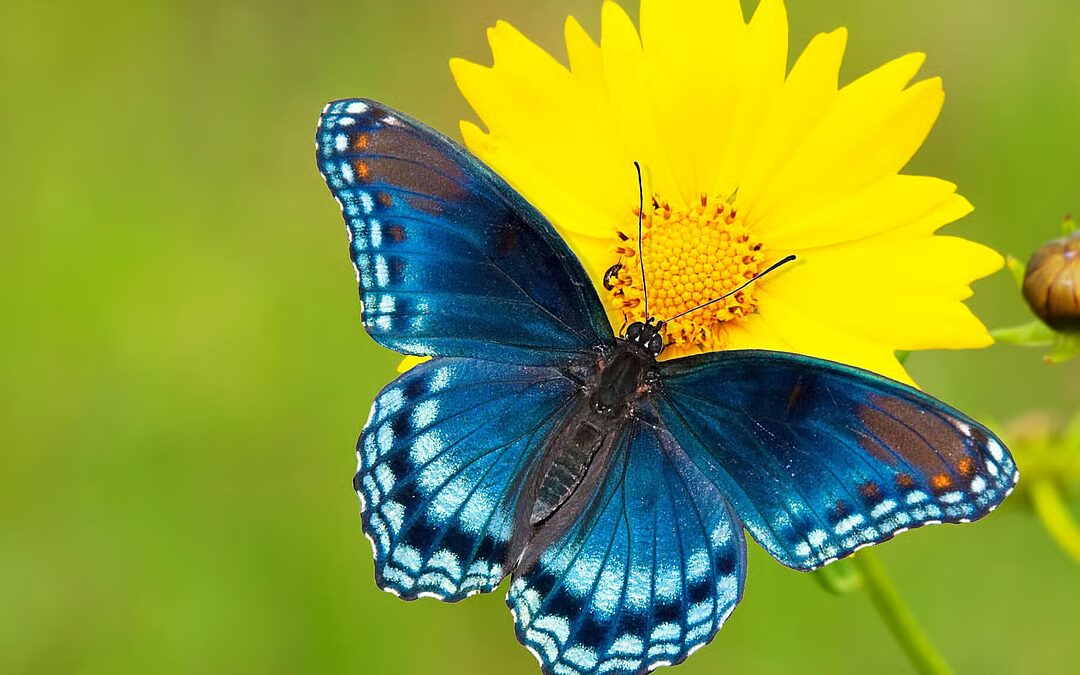
On this day, communities and nature enthusiasts come together to celebrate National Learn About Butterflies Day.
This special day is dedicated to exploring and appreciating butterflies, the delicate creatures that add beauty and color to our world.
Activities and educational opportunities allow people of all ages to engage with the environment and discover the vital role butterflies play in our ecosystem.
National Learn About Butterflies Day Timeline
100 million years ago
Butterflies Emerge in the Age of Dinosaurs
Genetic and fossil evidence indicates that true butterflies evolved from moth-like ancestors around 100 million years ago in North or Central America, diversifying alongside flowering plants.
1705
Maria Sibylla Merian Publishes “Metamorphosis Insectorum Surinamensium”
German-born naturalist and artist Maria Sibylla Merian documents butterfly life cycles in Suriname, producing some of the first detailed, accurate illustrations of metamorphosis based on direct observation.
1758
Linnaeus Formalizes Butterfly Classification in “Systema Naturae”
Carl Linnaeus’s 10th edition of “Systema Naturae” standardizes scientific names for many butterflies and other insects, laying the foundation for modern lepidopteran taxonomy used by researchers today.
1893
Frederick A. Dixey Links Butterfly Color to Survival
British physician and naturalist Frederick A. Dixey publishes work on butterfly coloration and mimicry, helping to connect vivid wing patterns with camouflage, warning signals, and natural selection.
1975
Monarch Wintering Grounds in Mexico Are Revealed
After a multinational search, researchers announce the discovery of major monarch butterfly overwintering sites in the mountains of central Mexico, transforming scientific and public understanding of monarch migration.
1993
UK Butterfly Monitoring Scheme Inspires Modern Citizen Science
Building on transect counts begun in the late 1970s, the UK Butterfly Monitoring Scheme is formalized, showing how long-term volunteer surveys can track butterfly populations and guide conservation policy.
2023
Global Butterfly Tree of Life Is Mapped
An international team of 88 scientists publishes a comprehensive butterfly family tree, sequencing hundreds of genes from almost 2,250 species to clarify relationships and origins for over 90% of known butterfly genera.
How to Celebrate National Learn About Butterflies Day
To celebrate National Learn About Butterflies Day in a fun and educational way, consider these quirky and playful suggestions:
Craft a Butterfly Garden
Dive into gardening by planting nectar-rich flowers and caterpillar host plants. Choose colorful blooms and native plants to turn your garden into a butterfly paradise.
Visit Butterfly Havens
Embark on an adventure to a local butterfly sanctuary or zoo with butterfly exhibits. It’s a fantastic way to see various butterfly species and learn about their habitats up close.
Butterfly-Themed Crafts
Unleash your creativity with butterfly crafts. Use materials like coffee filters, pipe cleaners, and pom-poms to make beautiful butterfly decorations. This activity is perfect for both kids and adults looking to add a splash of color to their day.
Snap and Share
If you spot butterflies fluttering by, capture their beauty with your camera. Sharing these photos online can spread joy and awareness about butterfly conservation.
Indulge in Butterfly Reads and Docs
Cozy up with books and documentaries about butterflies. They offer a treasure trove of fascinating facts and stories, ideal for anyone eager to learn more about them.
Spread the Word
Use social media to raise awareness about butterflies and the importance of protecting their habitats. Sharing knowledge and conservation tips can inspire others to join the cause.
Educational Fun for Kids
Engage children with butterfly-themed educational activities. From crafting to learning fun facts, there are countless ways to spark their interest in nature and the environment.
By participating in these activities, not only do you get to celebrate the beauty and importance of butterflies, but you also contribute to their conservation and the health of our ecosystems.
Let’s ensure these fluttering friends continue to grace our planet for generations to come.
History of National Learn About Butterflies Day
The origins of National Learn About Butterflies Day seem as mysterious and enchanting as the creatures it honors.
This day is not just about the appreciation of butterflies for their beauty and color but also emphasizes their crucial role in our ecosystems. Butterflies, with their intricate life cycles and migrations, show the wonders of nature and the importance of biodiversity.
For instance, the Monarch butterfly is known for its incredible migration journey, covering thousands of miles from Canada and the US to Mexico, a feat that spans multiple generations within a single migration cycle.
Despite the lack of detailed historical records pinpointing the exact start of this observance, the day is a call to action to protect and learn about butterflies.
It highlights their significance as pollinators and their position in the food chain, where they serve as both predators and prey. The health and abundance of butterfly populations are indicators of a thriving ecosystem.
Butterflies face threats from habitat loss, climate change, and pesticide use. Raising awareness about their plight and the steps we can take to support them, such as planting nectar-producing flowers and conserving their natural habitats, are essential messages conveyed on National Learn About Butterflies Day.
By celebrating this day, we’re encouraged to deepen our understanding of these fascinating insects and contribute to their conservation, ensuring they continue to thrive for generations to come.
Butterflies do more than just decorate our gardens. They are key players in pollination, helping to spread pollen from one flower to another.
This process supports plant growth, enabling the production of fruits, vegetables, and seeds. By learning about butterflies, we gain insights into the health of our surroundings and the importance of biodiversity.
Observing these insects also offers a wonderful way to connect with nature and foster a sense of wonder and curiosity.
Celebrating National Learn About Butterflies Day serves a deeper purpose than mere enjoyment. It highlights the need for conservation efforts to protect these insects and their habitats.
The day is a call to action to preserve the diverse species of butterflies and their life cycles and habitats. On this day, we’re reminded of butterflies’ ecological significance, encouraging us to protect their place in the natural world.
Facts About Butterflies Day
Butterflies Undergo One of Nature’s Most Radical Transformations
A butterfly’s complete metamorphosis involves not just an outward change but a breakdown and rebuilding of its body.
Inside the chrysalis, many larval tissues are dissolved and reorganized while clusters of cells called imaginal discs grow into adult structures such as wings, legs, and antennae.
Hormones like ecdysone and juvenile hormone tightly control the timing of these changes, which is why disruptions to temperature or nutrition during the larval stage can affect the size and form of the adult butterfly.
Butterflies See Colors and Patterns People Cannot
Butterflies have compound eyes that can detect ultraviolet light in addition to the colors humans see, and many species have wing patterns that reflect UV.
Flowers and butterfly wings often display UV “bullseyes” or nectar guides that help butterflies locate food and mates. This ability makes their visual world far richer than ours and influences how plants evolve colorful displays to attract them as pollinators.
The World Hosts Around 19,000 Species of Butterflies
Scientists estimate there are roughly 19,000 butterfly species globally, distributed across several major families such as Papilionidae (swallowtails), Nymphalidae (brush-footed butterflies), Pieridae (whites and sulfurs), and Lycaenidae (blues and coppers).
While butterflies are found on every continent except Antarctica, the greatest diversity occurs in tropical regions, particularly rainforests, where specialized plant–insect relationships have evolved over millions of years.
Butterflies Are Sensitive Barometers of Environmental Change
Because many butterfly species depend on specific host plants and have relatively short life cycles, their populations respond quickly to habitat loss, pollution, and climate shifts.
Long‑running monitoring programs, such as the UK Butterfly Monitoring Scheme and the North American Butterfly Association counts, have shown that declines in butterfly abundance can foreshadow broader losses in biodiversity and signal degraded grasslands, wetlands, and forests before other indicators register a problem.
Monarch Butterflies Navigate Using a Built‑In Solar Compass
Monarch butterflies that migrate thousands of miles across North America orient themselves using the position of the sun combined with an internal circadian clock in their antennae.
Experiments have shown that when the antennae are painted black or their clocks are shifted, the butterflies lose their sense of direction. This time‑compensated sun compass allows successive generations to stay on course to overwintering sites in central Mexico and along the California coast.
Mimicry Helps Some Butterflies Borrow a Bad Reputation
Many palatable butterflies avoid predators by mimicking the wing colors and patterns of toxic species, a strategy called Batesian mimicry.
The classic example is the viceroy in North America, which closely resembles the orange‑and‑black monarch that accumulates bitter chemicals from milkweed.
Birds that have had a bad experience eating a monarch often avoid the look‑alike viceroy as well, illustrating how visual deception can evolve as a survival tactic.
Traditional Cultures Have Long Seen Butterflies as Messengers and Symbols
Around the world, butterflies have carried rich symbolic meanings.
In some Native American traditions of the Southwest, butterflies appear in stories and pottery as messengers of change and bringers of dreams, while the Chickasaw Nation notes a special cultural significance for butterflies tied to respect for nature and seasonal renewal.
In classical Greece, the same word, “psyche,” referred to both the butterfly and the human soul, reflecting a belief that the insect’s emergence from a chrysalis mirrored spiritual transformation.
National Learn About Butterflies Day FAQs
Are there museums dedicated to butterflies?
Yes, butterfly museums worldwide celebrate these fascinating insects. The Butterfly Pavilion in Colorado is a renowned insect zoo featuring hundreds of live butterflies in a tropical rainforest habitat.
Similarly, the Butterfly Conservatory at the American Museum of Natural History in New York showcases live butterflies in a lush, enclosed environment, emphasizing their beauty and ecological importance.
These venues educate visitors about butterfly conservation and lifecycle.
Where can you walk among live butterflies year-round?
Several butterfly gardens allow visitors to interact with these insects all year.
For example, the Key West Butterfly and Nature Conservatory in Florida features over 50 species of live butterflies in a glass-enclosed habitat.
In Asia, the Penang Butterfly Farm in Malaysia combines live exhibits with educational programs.
These destinations immerse visitors in butterfly-rich environments, making them popular for nature lovers and families.
How do different countries celebrate butterflies?
In Mexico, the annual Monarch Butterfly Biosphere Reserve Festival honors the arrival of millions of monarchs. The event features traditional music, dance, and educational activities.
What are some unusual facts about butterfly behavior?
Butterflies taste with their feet. They have taste sensors on their tarsi, allowing them to identify suitable host plants for laying eggs.
How have butterflies inspired art and literature?
In 1902, Norwegian naturalist Kjell Bloch Sandved created the “Butterfly Alphabet,” photographing butterfly wings that resembled all 26 letters and numerals 0-9.
Are there any misconceptions about butterflies?
A common myth is that touching a butterfly’s wings will prevent it from flying. While excessive handling can harm them, a gentle touch won’t strip enough scales to impede flight.
How do butterflies contribute to scientific research?
Butterflies serve as bioindicators, helping scientists assess ecosystem health. Changes in butterfly populations can signal environmental shifts, aiding conservation efforts.
What are some unique butterfly species and their traits?
The Glasswing butterfly has transparent wings, providing camouflage. The Blue Morpho’s wings appear blue due to microscopic scales that reflect light.
How do butterflies navigate during migration?
Monarch butterflies use a combination of the sun’s position and an internal circadian clock to navigate their long migrations, traveling up to 3,000 miles.
Are there any festivals dedicated to butterflies?
The Texas Butterfly Festival in Mission, Texas, celebrates the region’s diverse butterfly species with field trips, educational workshops, and photography contests.