
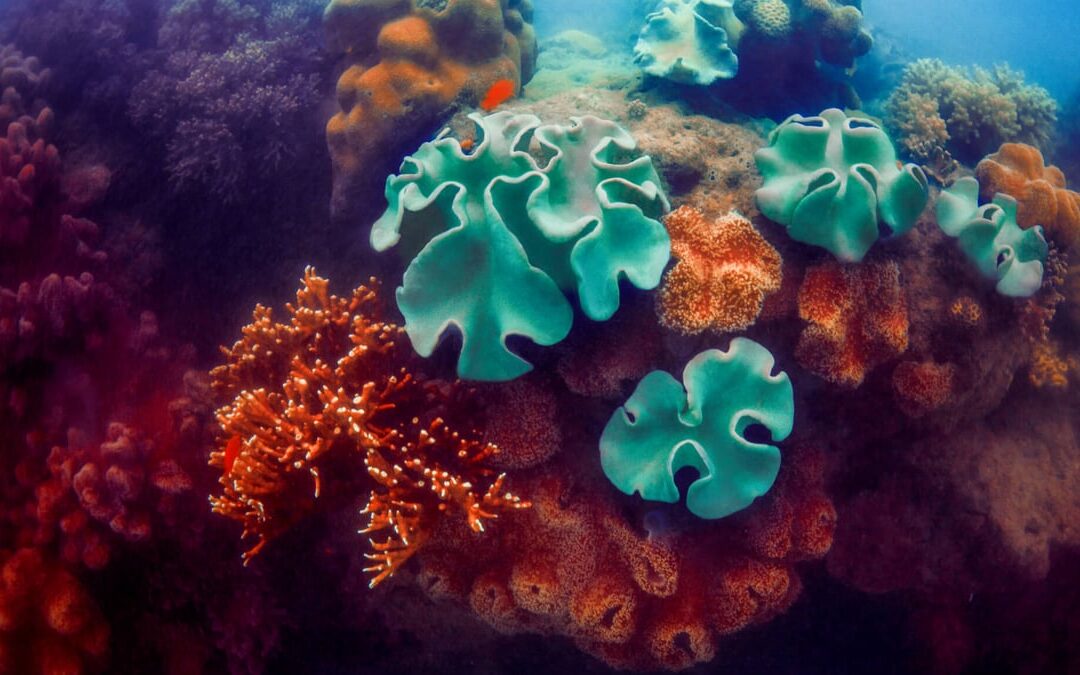
This area of more than 2 million miles of marine landscape, the Coral Triangle is located in the western Pacific ocean and houses more than 75% of the world’s species of coral. This area is home to more than 600 species of live coral that build reefs, and 2,000 different types of reef fish.
It is difficult to overstate what that level of biodiversity means in real life. Coral reefs are sometimes called the “rainforests of the sea” because they pack an astonishing amount of life into a relatively small area. In the Coral Triangle, reefs, mangrove forests, and seagrass meadows form a connected neighborhood.
Tiny coral polyps build complex limestone structures over time, creating hiding places and feeding grounds for fish, crabs, sea stars, clams, sharks, rays, and countless other species. These habitats also support people: coastal communities rely on healthy reefs and fisheries for food, jobs, and the stability of local economies.
The Coral Triangle’s reefs do more than host wildlife. Reef structures help buffer shorelines from wave energy, which can reduce coastal erosion and storm impacts. Mangroves and seagrasses, often found near coral reefs in this region, also store significant “blue carbon,” meaning they help lock away carbon in plant material and sediment. When these connected ecosystems thrive, they reinforce one another. When they break down, the ripple effects can be felt throughout the ocean food web.
Since the 1950s, scientists have shown that the population of coral reefs has been cut in half, creating a dire situation for coral and other marine wildlife. Global climate change, pollution, overfishing, coral mining and other human activities have been the main culprits for the destruction of this important landscape of the ocean.
Coral reefs are especially vulnerable because they are living communities balanced on a narrow range of conditions. When ocean temperatures rise for prolonged periods, many corals experience “bleaching,” a stress response that causes them to expel the tiny algae living in their tissues.
Those algae provide much of the coral’s energy and also give reefs many of their vibrant colors. Bleaching does not always kill corals immediately, but repeated or severe bleaching events can lead to widespread coral mortality and reduced reef growth.
Warming is not the only pressure. Pollution can arrive as untreated sewage, agricultural runoff, and industrial waste, all of which can overload coastal waters with nutrients. That fuels algal blooms that cloud the water and compete with corals for space and sunlight. Sedimentation from coastal development and deforestation can smother corals, blocking light and making it harder for coral larvae to settle and grow.
Overfishing adds another layer of strain. Reefs depend on a diverse cast of fish and invertebrates that graze algae, recycle nutrients, and keep the ecosystem stable. When too many herbivorous fish are removed, algae can take over. When top predators disappear, the food web can become unbalanced. Harmful fishing practices, such as blast fishing or cyanide fishing, can physically destroy reef structures and kill non-target species in the process.
Coral mining and unsustainable coastal construction can also chip away at reefs literally, with coral rock and sand removed for building materials. Even well-meaning tourism can damage reefs if people walk on corals, collect pieces as souvenirs, or anchor boats on fragile reef areas.
The good news is that reefs are not helpless. Many can recover if stressors are reduced and if there are nearby healthy reefs to supply larvae. Conservation strategies, when consistently supported, can improve reef resilience: protecting critical habitats, enforcing sustainable fishing rules, reducing land-based pollution, and restoring mangroves and seagrass beds that improve water quality and provide nursery grounds for fish.
Coral Triangle Day is here to bring light to the need for everyone, all over the world, to pay more attention and support efforts to help save this amazing area of biodiversity.
It is a reminder that ocean protection is not only a local concern for the countries within the Coral Triangle. The ocean connects food systems, climate systems, and economies across the planet.
Reef fish and seafood trade, global tourism, and even the stability of coastlines link back to the health of coral ecosystems. Coral Triangle Day invites people to learn, talk about the issues without sugarcoating them, and support practical actions that keep reefs alive and functioning.
How to Celebrate Coral Triangle Day
Looking for ideas and activities to get involved with Coral Triangle Day? Check out some of these to get started with:
The most meaningful celebrations tend to be the ones that translate awe into action. Coral reefs are visually stunning, but Coral Triangle Day is also about making the invisible things visible: the policy decisions, consumer choices, and community efforts that determine whether reefs can survive in a warming world.
Learn About Ocean Conservation and the Coral Triangle
One important way that individuals, groups, businesses, and political activists can get involved with Coral Triangle Day is by becoming more knowledgeable, sharing this knowledge, and advocating on behalf of the world’s oceans. Consider some of these facts to get started with:
-
Learning “ocean basics” can quickly turn into better daily decisions.
Understanding how coral functions, what stresses it, and what helps it recover makes it easier to recognize which actions matter most. For example, coral is not a rock or a plant, and reefs are not just pretty underwater scenery. They are living structures built by countless tiny animals that need clean water, stable temperatures, and time to grow.
-
While they may resemble plants, coral are actually live animals that are attached to the sea floor
Corals are colonies of polyps, each one an animal related to jellyfish and sea anemones. Many reef-building corals produce a calcium carbonate skeleton that forms the backbone of a reef. Their partnership with microscopic algae is a classic example of teamwork: the algae photosynthesize and share energy; the coral offers shelter and nutrients. This is also why reefs are usually found in clear, sunlit waters. When water becomes cloudy from sediment or pollution, it reduces the light corals need, slowing growth and weakening the entire reef community.
-
The Coral Triangle covers the economic zones of six countries, including Malaysia, the Philippines, Papua New Guinea, Solomon Islands, Timor Leste and Indonesia
This matters because conservation is not a single-project job. The Coral Triangle is a shared marine neighborhood across national boundaries, with fish populations, ocean currents, and ecosystems that do not stop at an invisible line on a map. That reality makes cooperative management essential. It also highlights how many different communities, languages, and livelihoods are intertwined with the same reefs. Support for conservation often works best when it respects local needs, includes community participation, and strengthens long-term food security.
-
The Coral Triangle is home to six of the world’s seven species of marine turtles
Marine turtles depend on healthy reefs and nearby habitats for feeding and shelter. Many also rely on beaches for nesting, which can be affected by coastal development and rising sea levels. Protecting turtles often means protecting the whole system: reducing plastic pollution (which turtles can mistake for food), minimizing disturbance at nesting areas, and ensuring fisheries use methods that reduce accidental capture.
To take learning a step further, Coral Triangle Day can be a good time to explore topics like these:
- What “reef resilience” means: why some reefs rebound after bleaching and others do not, and how reducing local stressors can improve survival odds.
- Why biodiversity supports stability: a reef with many species can better handle shocks because different organisms fill different roles.
- How seafood choices connect to reefs: demand influences fishing pressure, and responsible sourcing can help discourage destructive practices.
- What marine protected areas do well and where they fall short: protection is most effective when rules are enforced, community-supported, and designed around how fish actually move and breed.
Even small shifts in awareness can add up when shared through classrooms, workplaces, clubs, and community groups. The goal is not to become a marine biologist overnight. It is to become an informed ocean neighbor.
Attend or Host a Coral Triangle Event
Check out what kind of events may be taking place in the local community for Coral Triangle Day and then consider attending one. Or, for those who don’t have any events happening locally, consider hosting one! Educational events can be fun for schools while fund-raising opportunities abound in neighborhoods and communities. From beach clean-ups to ocean documentary film festivals, this is a great time to get creative in raising awareness about the needs of the Coral Triangle!
Events can be as simple as a conversation night or as hands-on as a shoreline cleanup. What makes an event effective is a clear purpose and a realistic action step. A few approaches that work well:
- Community cleanups with a sorting station. Collecting trash is helpful, but sorting it can be even more powerful. Seeing how much plastic packaging, fishing line, or single-use items show up can spark better choices and community advocacy for waste reduction.
- Film screening plus a local action plan. Pair a documentary with a discussion about what participants can do next: changing purchasing habits, supporting reef-friendly organizations, or joining a citizen science project.
- School activities that explain reefs as living systems. Build a simple “food web” game to show how losing one group, such as herbivorous fish, can shift the whole ecosystem. Art projects can also help younger learners remember coral as animals, not plants.
- Aquarium or marine center visits. If there is a local aquarium, it can provide a close look at reef species and an opportunity to learn about captive breeding, habitat restoration, and the challenges of reef care.
- Sustainable seafood potluck or cook-off. Keep it practical: highlight alternatives to overfished reef species, talk about why destructive practices harm reefs, and focus on making responsible choices feel doable rather than punishing.
Hosting can also include fundraising, but it does not have to be fancy. A small donation drive, a raffle, or a partnership with a local business can support reef research, coastal restoration, or community-led conservation programs.
For those who want a personal Coral Triangle Day challenge, these are globally relevant actions that connect back to reef health:
- Reduce single-use plastics, especially items that frequently escape waste systems (bottles, caps, bags, wrappers).
- Choose reef-safer sunscreens and sun protection habits. Physical barriers like rash guards and shade reduce the amount of product that ends up in the water, and choosing products designed to be less harmful to marine life can help in places with heavy coastal recreation.
- Use water and fertilizer thoughtfully. Over-fertilizing lawns and gardens can contribute to nutrient runoff that eventually impacts coastal waters.
- Support better fishing practices. Ask sellers questions, look for responsibly sourced seafood when possible, and avoid products associated with destructive harvesting.
- Speak up for ocean-smart policies. Waste management improvements, protected areas, and enforcement efforts often need public support to become reality.
History of Coral Triangle Day
The inaugural celebration of Coral Triangle Day took place in 2012 when it was founded through the efforts of the Coral Triangle Initiative on Coral Reefs, Fisheries, and Food Security (CTI-CFF). The event was purposefully set to take place one day after World Oceans Day to add impactful attention around the need to preserve and care for the world’s center for marine biodiversity.
Coral Triangle Day is also part of a larger campaign called Oceans Need Action, which encourages those involved in the Coral Triangle region to address the issues of threats caused by humans.
The creation of Coral Triangle Day reflects a growing realization that protecting reefs requires coordination at a scale similar to the challenges they face. The Coral Triangle Initiative on Coral Reefs, Fisheries, and Food Security (CTI-CFF) brought together governments and partners around shared goals: healthier reefs, sustainable fisheries, and stronger food security for communities that depend on the sea.
That mix is important. Coral conservation is not only about saving charismatic fish or colorful reef photos. It is also about ensuring that coastal families can continue to access reliable protein, stable livelihoods, and safe shorelines.
Coral Triangle Day grew out of this cooperative spirit. By placing special focus on the Coral Triangle as a global center of marine diversity, the day encourages a big-picture view that still values local knowledge.
In many reef-dependent communities, traditional management practices, seasonal closures, and locally enforced fishing rules have long existed in different forms. Modern conservation often works best when it supports and strengthens these community-based approaches, combining them with scientific monitoring and fair governance.
The “Oceans Need Action” theme is a practical reminder that awareness without follow-through does not change outcomes. Coral Triangle Day helps keep attention on actions that actually reduce pressure on reefs. Examples of the kinds of work often emphasized by reef initiatives include:
- Building networks of marine protected areas that protect spawning sites, nursery grounds, and biodiversity hotspots.
- Improving fisheries management so that fishing remains productive without stripping reefs of key species.
- Reducing land-based sources of pollution through better wastewater treatment and watershed management.
- Supporting coastal habitat restoration, especially mangroves and seagrasses that protect shorelines and improve water quality.
- Strengthening monitoring and enforcement, because rules only work when they are understood and followed.
Coral Triangle Day also serves a storytelling role. Reefs can be easy to take for granted because most people do not see them regularly. A dedicated day gives conservation groups, educators, researchers, and community leaders a shared moment to communicate what is changing underwater, what progress has been made, and what still needs investment and attention.
A few of the many events that can be celebrated throughout the year along the same lines of Coral Triangle Day include World Reef Awareness Day on June 1, World Whale Day in February, and National Oceans Month in June.
These related observances can complement Coral Triangle Day by highlighting different pieces of the same ocean puzzle. Reef awareness focuses attention on habitat health and restoration. Whale-focused events broaden the conversation to migration routes, ship strikes, and noise pollution. A month dedicated to oceans invites bigger commitments, such as long-term plastic reduction efforts or ongoing support for marine research.
Celebrating Coral Triangle Day alongside these other ocean-minded events can also help people avoid “one-and-done” action. Reefs recover over years, not days, and protecting them is a long game. The best way to honor the Coral Triangle is to keep learning, keep showing up, and keep making practical choices that give corals, fish, turtles, and coastal communities a fair chance to thrive.