
A light wind swept over the corn, and all nature laughed in the sunshine.
Anne Bronte
In the height of summer, under a cornflower blue sky filled with cotton-ball clouds, the smell of grilled meat fills the air. Children are laughing and playing in the creek, and the adults are setting up the picnic tables with checkered table cloths, red solo cups and paper plates.
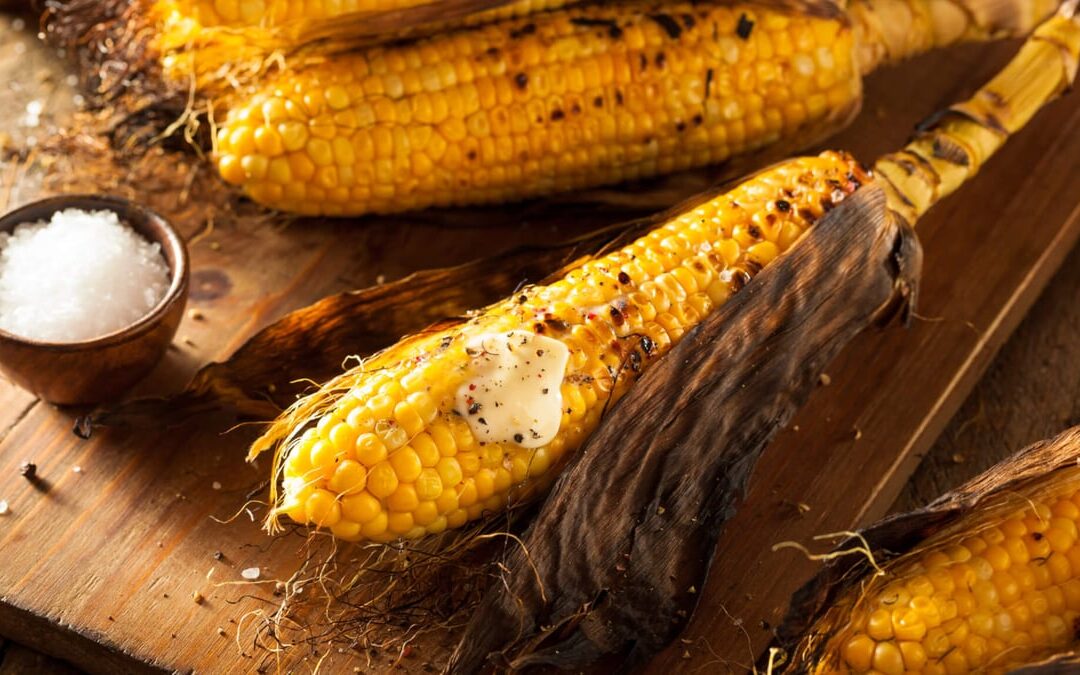
In the middle of the table sits a giant bowl covered with a layer of aluminum foil, with steam gently escaping from around the edges, rich with the smell of fabulous, buttery corn on the cob.
Corn on the Cob Day celebrates events like these, whether held outdoors or indoors. It reminisces about the gathering of family around one of the sweetest healthy cookout treats that is available throughout the summer.
It’s time for Corn on the Cob Day!
How To Celebrate Corn On The Cob Day
Celebrating Corn On The Cob Day is simple and fun! Try these ideas for celebrating or create new ideas:
Try Different Ways of Cooking Corn on the Cob
Start by cooking up some corn on the cob in the traditional way–boiling. It only takes a few minutes in the water (don’t salt it first!). Then enjoy eating it with a generous heap of butter and salt!
Now that opens the doorway to a whole variety of options to be considered. Another way to prepare the dish is to wrap corn on the cob in aluminum foil and let it roast in the coals of a campfire (or in the same way on a gas or charcoal barbecue grill) until it’s positively bursting with deliciousness.
Explore Seasoning Options
Anyone knows that corn on the cob needs butter and can be delicious just on its own. But don’t stop there because other options are worth a try as well!
Start by adding butter as a base, and then dust the corn on the cob with a choice of seasonings. Simple salt can work just fine, or get more creative with seasoning salt, pepper, or any of a variety of spices that suit your palette.
Try these varieties:
- Cajun Corn on the Cob. Mix garlic powder, onion powder, red pepper, paprika and oregano, then sprinkle lightly.
- Corn on the Cob Citrus Seasoned Salt. Add sea salt, hot smoked paprika, black pepper, smoked salt, and finely grated orange zest, then rub on (while cooking on the grill, if preferred).
- Italian Corn on the Cob. Go Italian by sprinkling buttered corn on the cob with parmesan cheese, powdered garlic and italian seasonings (basil, oregano, rosemary, thyme and marjoram).
Learn More About Corn
While it is in most people’s kitchens at one time or another, many people don’t know some of these fun facts about corn.
For instance, although the most common corn color is yellow, it can also be cultivated to be purple, green, blue-gray, red, white and even black. Here are some other fun facts about corn:
- The word ‘maiz’ or ‘maize’ has Native American/Spanish language origins and that is what this grain is called in many languages.
- Most cobs of corn have an average of 800 kernels, arranged in 16 rows around the cob.
- Corn is produced on all of the inhabited continents on the planet (but it cannot grow in Antarctica).
- The United States is the largest single producer of corn on the planet, providing at least 40% of the world’s corn harvest.
Celebrate Corn on the Cob All Summer Long
While corn on the cob day comes at the beginning of June, anyone from the corn growing belt in the US knows that the best time to get fresh corn on the cob is at the end of the summer.
The great news is that it isn’t necessary to choose between the two–just go ahead and celebrate at both times. In fact, corn on the cob can be celebrated all throughout the summer!
National Corn on the Cob Day Timeline
-
Maize Is Domesticated in Mesoamerica
Early farmers in the Balsas River region of southern Mexico selectively bred teosinte into the first maize, laying the foundation for later culinary uses of whole ears, including boiling and roasting.
-
Maize Agriculture Spreads and Ceremonial “Green Corn” Feasts Emerge
By the Late Archaic and Early Woodland periods, maize was a staple crop across parts of North America, and Indigenous communities began marking the harvest of fresh “green corn” with rituals and communal meals that featured ears of corn.
-
Roasting Fresh Ears Becomes Established in Native North America
Historic and ethnographic records describe Eastern Woodlands and Southeastern tribes roasting fresh ears of maize in embers or over open fires, a clear forerunner of modern grilled corn on the cob.
-
Colonial Cooks Adopt “Green Corn” and Roasted Ears
European settlers in North America adopted Indigenous practices of roasting and boiling fresh ears of maize, recording “green corn” as a seasonal delicacy eaten straight from the cob.
-
Sweet Corn Varieties Are Developed and Sold for Table Use
American seed growers begin offering distinct “sweet corn” varieties bred for higher sugar content, making tender, fresh ears an increasingly popular garden and market crop for boiling and roasting whole.
-
The Phrase “Corn on the Cob” Enters American Culinary Language
Printed American cookbooks and newspapers start using the term “corn on the cob” to describe boiled or roasted ears served whole, signaling that eating corn straight from the ear has become a recognizable, named dish.
-
Corn on the Cob Becomes a Fairground and Picnic Staple
With the rise of automobile tourism and state and county fairs, vendors across the United States sell freshly boiled or grilled ears of sweet corn, firmly associating corn on the cob with outdoor festivals, barbecues, and summer leisure.
History of Corn On The Cob Day
The history of Corn On The Cob Day goes back to a time even before European settlers actually first came to the Americas. Corn is a new world plant, native to the American lands, that was originally enjoyed by the Native Americans who were there before the westerners “discovered” the land.
Since then, corn has made various appearances in dishes all over the world, and the by-products of this plant have been used in quite literally millions of different products.
For instance, in the United States, high fructose corn syrup is found in almost every candy, and certainly, in almost every carbonated beverage that can be found. Other corn products that are used en masse include oil, cereals, snacks, breads and even fuel.
Corn on the cob comes in more varieties than a person might think! Sure there’s the traditional yellow corn, but there are also white and mixed colored corn that can be eaten on the cob. In any case, almost every type of corn can be prepared into corn on the cob through various methods of preparation, and each brings its own combination of tastes and flavors.
There is no limit to the delicious meals and fantastic flavors when a little corn on the cob is added to the table. Corn On The Cob Day is the opportunity to try different flavors, grab the butter, and enjoy delicious corn on the cob!
Corn On The Cob Day Facts
-
Even-Numbered Rows on a Cob
Botanically, each kernel row on a corn cob develops from a paired arrangement of spikelets, which leads to an even number of rows in almost all ears; typical sweet corn cobs carry 12 to 20 rows and roughly 500 to 800 kernels, depending on variety and growing conditions.
-
From Wild Teosinte to Modern Sweet Corn
Modern corn on the cob descends from a wild grass called teosinte that had only a few hard kernels; archaeogenetic research indicates that Indigenous farmers in southern Mexico began selectively breeding it more than 9,000 years ago, eventually creating large, soft-kernel ears recognizable as maize by at least 4,300 years ago.
-
Why Sweet Corn Tastes So Sweet
Sweet corn varieties are genetically different from field corn because of mutations in genes that control how sugar is converted to starch in the endosperm; in sweet corn, these mutations slow that conversion, so freshly harvested ears can contain two to three times more sugar than standard field corn, especially when eaten within a day of picking.
-
Nutrients Hidden in an Ear of Corn
A medium ear of boiled sweet corn typically provides around 2 to 3 grams of fiber, notable amounts of folate and vitamin C, and is one of the richest vegetable sources of lutein and zeaxanthin, carotenoids linked to eye health that remain relatively stable during common cooking methods such as boiling and grilling.
-
How Corn Reached the Rest of the World
After Columbus’s voyages, maize spread rapidly from the Americas across Europe, Africa, and Asia through Spanish and Portuguese trade routes; by the 17th century, it had become a staple crop in regions as far apart as the Balkans, West Africa, and parts of China, often grown for both grain and fresh “green” ears eaten similarly to corn on the cob.
-
Elote: Mexico’s Street-Corn Tradition
In Mexico, freshly boiled or grilled ears are commonly sold as elote, typically slathered with mayonnaise or crema, rolled in crumbly cheese like queso fresco or cotija, and dusted with chili powder and lime, a street-food style that reflects the country’s long history of treating fresh green corn as a portable snack.
-
“Green Corn” Ceremonies in the Southeast
Among several Southeastern Indigenous nations, including the Muscogee (Creek), the Green Corn Ceremony marks the first ripening of corn; fresh ears feature in days-long rituals of renewal, forgiveness, and communal feasting that historically regulated when the community could begin eating the new corn crop.