
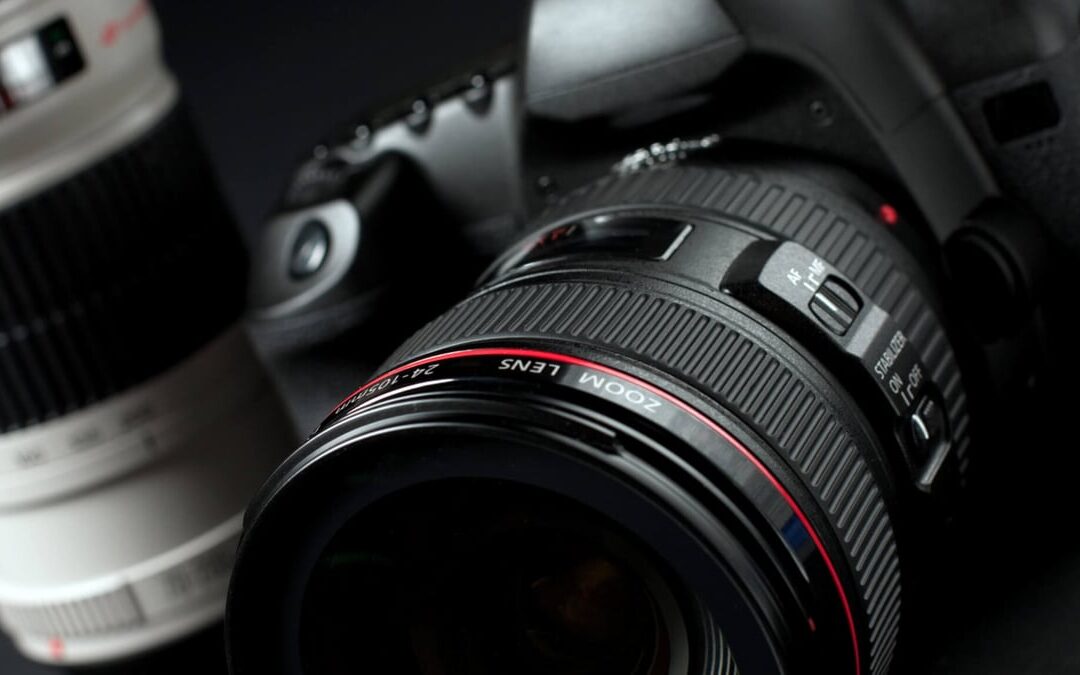
The click of a shutter can preserve a split second long after the sound has faded. A photograph might record a family gathering, explain a scientific discovery, document injustice, sell a product, or turn an ordinary patch of light into art. Whether it is captured on film, a digital camera, or a phone, an image reflects a series of choices about timing, viewpoint, light, and what remains outside the frame.
World Photography Day celebrates both the craft and the people who use it. Professionals may spend hours controlling studio light, waiting for wildlife, or editing a documentary project, while a beginner can make a meaningful image with the camera already in a pocket. The occasion is an invitation to look more carefully, make photographs with intention, and appreciate the visual records that connect people to places and experiences beyond their own.
How to Celebrate World Photography Day
The most direct way to participate is to choose a camera and make a small, focused set of images. Expensive equipment is unnecessary. A phone is ideal for an everyday photo walk because it is light, discreet, and easy to use. A digital or film camera offers more manual control, but the strongest tool is a clear idea. A photographer might document one street, follow a single color through a neighborhood, photograph changing reflections, or record the hands of people practicing different skills.
Setting a constraint makes the exercise more creative. Take only 12 or 24 frames, use one focal length, photograph from waist height, or work entirely in black and white. Limiting options slows down the impulse to snap everything and encourages closer attention to the edges of the frame, the background, and the moment of release. Anyone using film can embrace its deliberate pace, then have the roll processed by a reputable laboratory or learn basic development through a supervised class.
A few fundamentals can improve almost any photograph. The rule of thirds offers a simple starting point for positioning a subject, although it is a guide rather than a law. Leading lines such as paths, railings, or shadows can direct attention through the image. Including foreground, middle-ground, and background elements can create depth. Before pressing the shutter, it helps to check all four corners for stray branches, signs, or bright distractions.
Light deserves equal attention. Soft window light works well for portraits and still lifes, while the low-angle light shortly after sunrise or before sunset can reveal texture and produce long shadows. Midday sun creates strong contrast, which can become part of a bold composition rather than a problem to hide. Photographers experimenting with manual controls can observe how aperture affects depth of field, shutter speed freezes or blurs movement, and ISO changes a camera’s sensitivity setting and the appearance of noise. Changing one control at a time makes the lesson easier to see.
Portraits can become a collaborative activity. Family members or friends might recreate an old photograph, update a group picture, or sit for a simple window-light portrait. The photographer should ask permission, discuss how the image may be used, and let the subject see the result. Candid photography also calls for judgment and respect, particularly around children, vulnerable people, private spaces, ceremonies, and emotionally difficult situations. Legal rules vary by location, and permission to take a picture is not always the same as permission to publish it.
Nature photography offers another route, whether at a park, botanical garden, zoo, or backyard feeder. A longer lens can maintain a safe distance, but patience is often more useful than reach. Wildlife should never be baited, chased, handled, or crowded for a photograph. Visitors should stay on marked paths, obey venue rules, and avoid disclosing the precise locations of nests or threatened species. At zoos, shooting close to the glass and turning off flash can reduce reflections without disturbing animals.
People who prefer looking at photographs can visit a museum, gallery, archive, or local historical society. Posted rules matter because some exhibitions permit handheld photography but prohibit flash, tripods, or photography altogether. Instead of racing from masterpiece to masterpiece, a visitor can select several images and study where the photographer placed the subject, how light structures the scene, and what the caption reveals. Comparing portraits by Yousuf Karsh, landscapes by Ansel Adams, street scenes by Vivian Maier, or documentary work by Dorothea Lange shows how differently photographers use the same basic medium.
A home photo archive can provide a worthwhile project too. Prints can be sorted by approximate date, people, and place, then stored in acid-free enclosures away from direct sunlight, heat, and damp conditions. Names and context should be recorded with a soft pencil on an archival sleeve rather than a ballpoint pen on the photograph. Digital files benefit from descriptive filenames and multiple copies. A practical backup plan keeps one working copy, one local backup, and one copy in a separate physical location or reputable cloud service.
For a shared celebration, a group can organize a photo walk, portrait exchange, slideshow, or small exhibition. Participants can agree on a theme and display one image each with a short caption explaining the choice. A business or community organization might invite a professional photographer to update staff portraits or document its work. Before renting a studio, organizers should confirm what the fee includes, such as lights, stands, backgrounds, changing space, insurance requirements, and setup time. Studios provide predictable weather, controlled light, privacy, and power outlets, but a clear shot list and schedule are still essential.
Editing is part of photography, not merely a rescue operation. Cropping can strengthen a composition, while adjustments to exposure, contrast, and color can bring a file closer to what the photographer saw. Documentary and news images require particular restraint because removing objects or combining moments can mislead viewers. For any genre, preserving the original file allows edits to be revisited. Sharing only a carefully selected handful of images usually tells a stronger story than uploading every frame.
Photography: Key Facts
From memory and evidence to chemical processes, photography has changed how people record and interpret the world.
-
Taking a photo can redirect memory
In experiments, people who chose to take photographs later remembered more visual details of an experience, but fewer auditory details, than people who did not photograph it. A meta-analysis in the same research found a small, consistent visual-memory advantage for photo-taking.
-
The daguerreotype was announced before it was patented
The daguerreotype, publicly announced in 1839, became widely available after the French government acquired the rights and presented the process as a gift “free to the world” — although use in Britain still required a licence because a patent had been filed there.
-
Negatives made reproducible photographs possible
William Henry Fox Talbot’s calotype process created a paper negative from which multiple positive prints could be made. This broke with the daguerreotype’s one-of-a-kind image and established the negative-to-positive principle used by later film photography.
-
Wet plates demanded a portable darkroom
Frederick Scott Archer’s wet-collodion process, introduced in 1851, produced detailed glass negatives with shorter exposures, but the plate had to be sensitized, exposed and developed while still wet. Photographers working outdoors therefore travelled with a darkroom tent or wagon.
-
Photographs are evidence, not automatic proof
The Library of Congress advises researchers to treat a photograph as they would any other historical document: assess its caption, creator, date, provenance and context. Cropping, staging and missing context can all change what an image appears to show.
History of World Photography Day
The timing of World Photography Day recalls a major public milestone for the daguerreotype in France. Louis Daguerre developed the process after working with Nicéphore Niépce, whose earlier experiments had produced a permanent camera-made image. The daguerreotype created a highly detailed image on a silver-coated copper plate. Each plate was a unique object, often protected behind glass because its surface was delicate.
In 1839, the French government acquired rights to the process and presented it publicly, making the method broadly available outside Britain, where patent restrictions applied. The announcement helped photography move from private experimentation into public and commercial life. Portrait studios spread, and people who could never commission an oil painting gained access to a precise likeness, although early sittings still demanded patience and rigid poses.
Photography did not result from a single flash of invention. Scientists and artists had long understood the camera obscura, which projects an inverted view through a small opening. The harder problem was fixing that projected light so the image would not disappear. Niépce, Daguerre, William Henry Fox Talbot, and other experimenters developed different chemical solutions. Their competing methods established ideas that would shape photography for generations, including the one-of-a-kind plate and the reproducible negative.
Over time, faster materials shortened exposures and made subjects easier to photograph. Portable cameras and commercial processing eventually put picture-making within reach of ordinary households. Smaller formats gave photojournalists and street photographers greater freedom of movement, while improved color materials expanded the medium’s expressive and commercial possibilities. Photography entered newspapers, advertising, medicine, astronomy, policing, family albums, passports, and scientific fieldwork.
Electronic imaging changed the medium again. Digital cameras replaced chemically processed film with sensors and image files, then phones combined cameras with editing software and instant distribution. The basic challenge remained familiar: control the light and decide where to point the lens. What changed dramatically was scale. Billions of images could be made, copied, searched, altered, and shared with an ease that nineteenth-century practitioners could scarcely have imagined.
The annual observance itself grew from a proposal by Indian photography teacher O.P. Sharma in 1988. According to the organizers’ account, photography groups helped establish the first observance in 1991. Korske Ara later promoted it online as World Photo Day, helping an international audience share images through digital platforms. Its connection to the public unveiling of the daguerreotype keeps the focus on photography’s public history while allowing photographers of every style and experience level to take part.
World Photography Day Timeline
-
First Surviving Permanent Photograph
Nicéphore Niépce made View from the Window at Le Gras using a camera obscura and a pewter plate coated with bitumen. The exact year remains uncertain, but the heliograph is the earliest camera-made photograph known to survive.
-
Daguerreotype Goes Public
France publicly announced Louis Daguerre’s daguerreotype process in 1839. Its silver-plated copper images made photography commercially viable and helped establish portrait photography as a public practice.
-
The Calotype Is Patented
William Henry Fox Talbot patented the calotype in 1841. Unlike a daguerreotype, its paper negative could be used to produce multiple positive prints, a principle that shaped later negative-positive photography.
-
Kodak Simplifies Camera Use
George Eastman brought the first Kodak camera to market in July 1888. Sold with preloaded roll film and promoted with the line “You press the button, we do the rest,” it shifted much of the processing work from the customer to the company.
-
Leica Makes 35mm a Still-Camera Standard
The Leica I, introduced in 1925, is widely regarded as the first practical and commercially successful 35mm still camera. Its compact format helped make high-quality, portable photography feasible for everyday use.
-
Kodachrome Brings Color Film Forward
Eastman Kodak introduced Kodachrome color film in 1935. The film became a defining color-photography process and extended color images beyond earlier specialist and experimental methods.
-
A Digital Camera Records Its First Image
Kodak engineer Steven Sasson developed the first digital camera in 1975. The prototype replaced film with an electronic sensor and recorded images as digital data, beginning photography’s transition to electronic capture.
Learn About World Photography Day
Photography is simultaneously an art, a technology, a profession, and a form of evidence. A camera records light, but a photographer determines the angle, timing, lens, exposure, and boundaries of the frame. That authorship explains why two people standing in the same place can produce radically different pictures. It also explains why a photograph should be interpreted rather than treated as an automatically complete account of an event.
Captions, dates, creators, and provenance help establish what an image shows. Cropping can exclude critical context, posing can be mistaken for spontaneity, and editing can change meaning. Historical photographs are most informative when considered alongside letters, records, testimony, or other images from the same event. The same habits improve everyday media literacy: viewers can ask who made an image, why it was shared, whether the stated location is credible, and whether reverse-image tools reveal an earlier use.
Photographs also carry responsibilities toward their subjects. Ethical practice involves minimizing harm, avoiding demeaning stereotypes, and representing people with context and dignity. Documentary photographers may face a genuine tension between recording a difficult reality and intervening to help. There is no universal answer for every situation, but transparency about methods and thoughtful consent are better guides than the pursuit of a dramatic picture at any cost.
Studying photographs can sharpen visual literacy even for someone who never plans to master a camera. A viewer can notice whose perspective dominates, what information sits beyond the frame, and how sequencing changes a story. Those questions reveal photography’s unusual power: it can preserve personal affection, support research, influence public opinion, and create beauty, all through the careful organization of light inside a rectangle.