
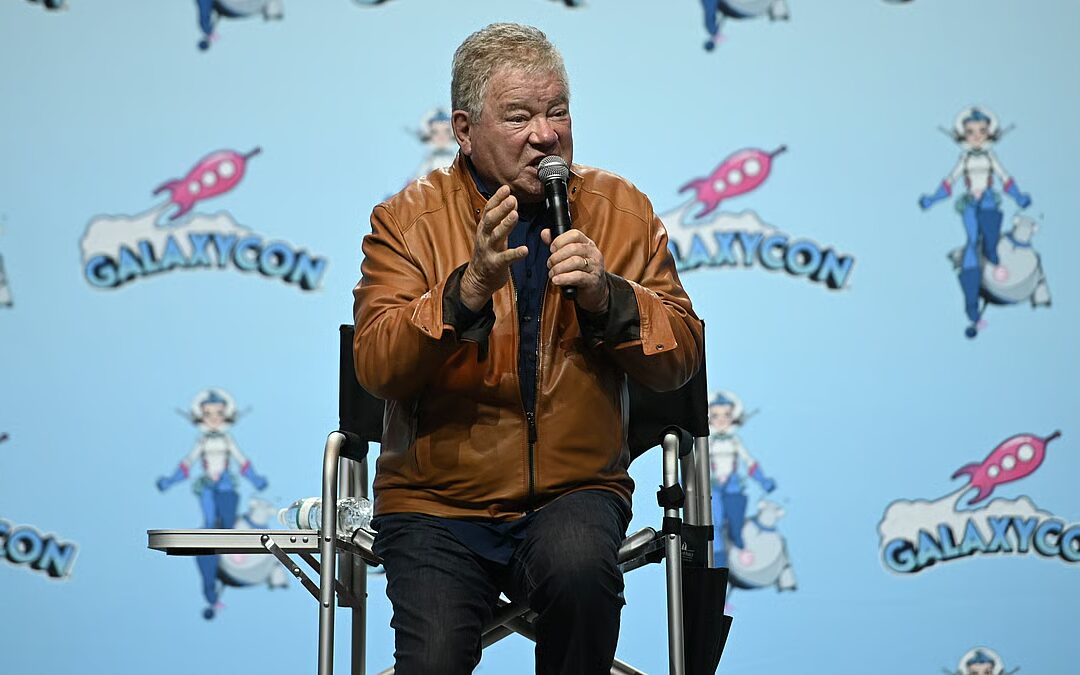
People all over the world spend one day a year speaking a little differently—slower, more spaced out, with sudden energy.
That’s what happens on Talk Like William Shatner Day. It’s a fun way to copy the well-known way he speaks, especially from his time as Captain Kirk. Simple conversations turn playful, and the shift in tone makes even normal words feel exciting.
This lighthearted event also points to Shatner’s lasting place in pop culture. His voice, his timing, and his charm left a strong impression on audiences.
When people speak like him, they’re not just joking around—they’re remembering how one performer made something as simple as talking feel unique. It’s a cheerful reminder of how style can stick with us.
Talk Like William Shatner Day Timeline
1954
Classical Stage Training at Stratford
Shatner joins the newly founded Stratford Shakespeare Festival in Ontario, honing the precise diction and dramatic pauses that later define his screen delivery.
1966
Debut as Captain James T. Kirk
The original Star Trek premieres on NBC with Shatner as Captain Kirk, bringing his clipped phrasing and sudden bursts of intensity to a weekly television audience.
1968
Release of “The Transformed Man”
Shatner issues his debut spoken-word album, blending Shakespeare with pop songs in a theatrical, heavily punctuated vocal style that becomes a pop‑culture curiosity.
1978
Iconic “Rocket Man” Performance
At the Saturn Awards, Shatner performs Elton John’s “Rocket Man” in a surreal, multi-layered spoken rendition that cements his cadence as a subject of parody and imitation.
1982
Rise of Shatner Impressions in Comedy
With the success of Star Trek II and syndicated reruns, comedians and impressionists increasingly mimic Shatner’s halting speech on television and in stand-up acts.
2004
Self‑Parody on “The Ultimate Computer” DVD
In Star Trek DVD extras and convention appearances, Shatner leans into his reputation, cheerfully acknowledging and exaggerating the rhythms fans love to imitate.
2011
Spoken‑Word Career Revival
Shatner’s album “Seeking Major Tom” reaches the Billboard charts, showcasing his now-celebrated talk-singing delivery and introducing his distinctive speech to new generations.
How to Celebrate Talk Like William Shatner Day
Celebrating Talk Like William Shatner Day can be both fun and engaging. Here are several creative ways to honor the iconic actor’s unique style:
Host a Shatner-themed viewing Party
Gather friends for a marathon of William Shatner’s most memorable performances. Choose episodes from “Star Trek” or films like “T.J. Hooker.”
Encourage attendees to speak in Shatner’s distinctive cadence during the event.
Practice Shatner’s Speech Patterns
Spend time mastering the pauses and emphases that define Shatner’s delivery. Watch tutorials or analyze his speeches to capture the nuances. Challenge friends to a friendly impression contest.
Share Your Impressions Online
Record a video of your best Shatner impersonation and post it on social media platforms. Use relevant hashtags to connect with other enthusiasts and join the broader celebration.
Attend Local Fan Gatherings
Look for community events or fan club meetings dedicated to Shatner and his work. Participating in group activities can enhance the celebratory experience and provide opportunities to meet fellow fans.
Explore Shatner’s Musical Endeavors
Delve into Shatner’s musical projects, such as his spoken-word albums. Listening to these works offers a different perspective on his artistic range.
History of Talk Like William Shatner Day
Talk Like William Shatner Day started in 2009. The idea came from Maurice LaMarche, a voice actor known for his strong Shatner impression.
He posted a short video online suggesting that fans copy Shatner’s unique way of speaking on his birthday, March 22.
Not long after, another fan named Doug VanHorn launched a Facebook page promoting the same idea. They didn’t know about each other at first but eventually joined forces to boost the celebration.
The day quickly caught on. Fans loved the chance to speak with dramatic pauses and bold energy, just like Shatner. Over the years, the event has grown beyond small fan groups.
People across the internet share clips, do impressions and even hold parties. Some dress up as Shatner’s most famous character, Captain Kirk. Others just have fun adding dramatic flair to everyday words.
What began as a simple joke turned into an annual tradition. It reminds people of Shatner’s lasting impact on pop culture. His voice, timing, and charm made him stand out. Now, every year, people of all ages take a moment to talk like the man who made pauses exciting.
Facts About Talk Like Wiliam Shatner Day
Kirk’s Speech Helped Popularize “Pause Acting” in Pop Culture
William Shatner’s performance as Captain James T. Kirk is often cited in acting and media commentary as a prime example of “pause acting,” where deliberate breaks, shifted emphasis, and unusual pacing create drama even in ordinary lines; this style has been so widely parodied that it has become a recognizable shorthand for heightened, melodramatic delivery in North American pop culture.
Shatner Turned Spoken-Word Pop Covers into a Signature Art Form
Beyond television, William Shatner built a cult musical reputation through spoken-word albums such as “The Transformed Man” (1968), where he recites pop songs and Shakespeare with exaggerated phrasing and abrupt pauses, a style critics have described as theatrical and offbeat but influential enough to inspire later spoken-word and novelty recordings.
A 1968 “Star Trek” Episode Made Television History with an On‑Screen Kiss
During Shatner’s tenure as Captain Kirk, the 1968 “Star Trek” episode “Plato’s Stepchildren” featured an interracial kiss between Kirk and Lieutenant Uhura, a scene that network executives initially feared Southern stations would refuse to air but which has since been cited by television historians as a landmark moment in challenging broadcast taboos.
Shatner’s Kirk Helped Inspire Real Astronauts and Space Professionals
Numerous NASA personnel and astronauts have credited the original “Star Trek,” and specifically Captain Kirk’s swaggering command style, with influencing their interest in science and spaceflight, to the point that NASA has repeatedly invited Shatner to narrate videos and public messages that frame real missions using the language and optimism of the fictional Starfleet.
Comedy Impressionists Used Shatner as a Masterclass in Prosody
Professional impressionists like Maurice LaMarche have broken down Shatner’s delivery in public tutorials, noting how he jumps between clipped, almost whispered phrases and sudden surges of volume, treating each sentence as if it has multiple musical “beats,” which makes his speech patterns ideal for teaching timing, phrasing, and vocal character work to aspiring voice actors.
Parodying Shatner Showcases How Fair Use Protects Celebrity Impressions
In the United States, comedians who imitate William Shatner on stage or in sketches typically rely on fair use and First Amendment protections of parody, and legal commentators point out that as long as the impression is clearly transformative and not used to mislead consumers into thinking the celebrity endorsed a product, it is generally treated as protected speech.
“Star Trek”’s Bridge Chatter Influenced How Sci‑Fi Portrays Command Speech
Media scholars have argued that the way Captain Kirk and his crew speak on the Enterprise bridge, with clipped technical commands, status reports, and urgent back‑and‑forth exchanges, helped set a template for later science fiction series and films, where command-center dialogue mimics real military and aviation communication while still sounding accessible to general audiences.