
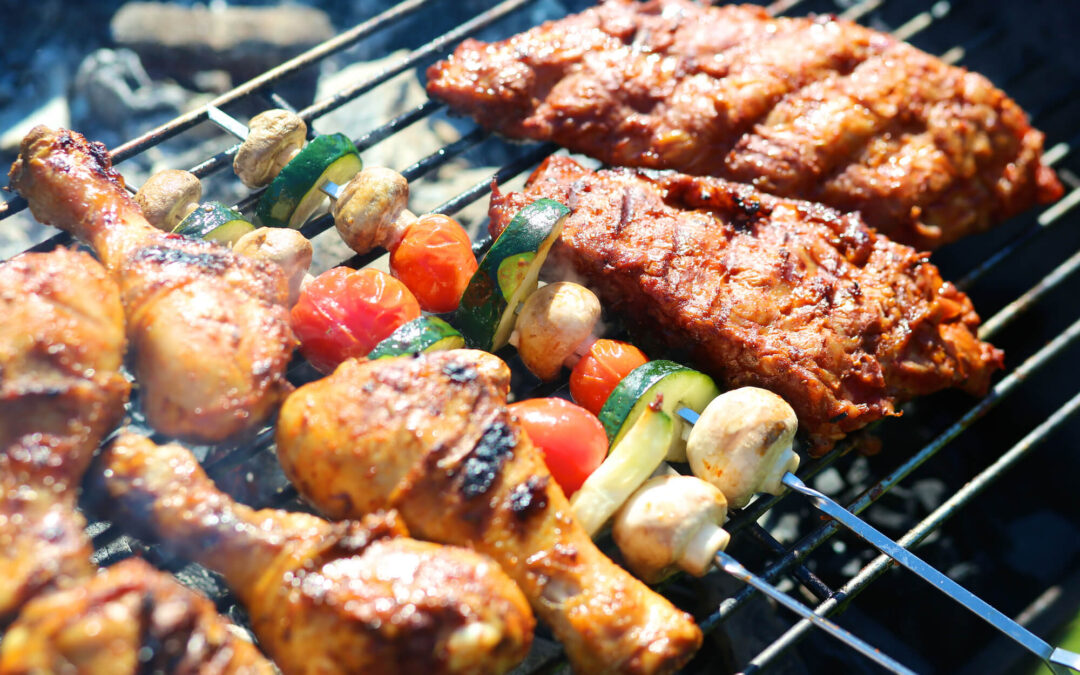
Barbecue may not be the road to world peace, but it’s a start.
Anthony Bourdain
There’s one thing that truly tells you that it’s summer, and that’s the rich, savory smell of barbecue floating through the air.
In every small town all over the world, the smell of starter fluid and charcoal is a sign that something beautiful is happening in a backyard somewhere.
National Barbecue Day was created to laud this age-old cooking practice and to encourage us all to get out and try our hand at creating delicious backyard cuisine.
National Barbecue Day Timeline
-
Indigenous barbacoa observed by Spanish chroniclers
Taíno and other Indigenous peoples in the Caribbean are recorded cooking meat on raised wooden frames over coals, known as “barbacoa,” a method that influences later barbecue techniques and terminology.
-
“Barbecue” appears in early English travel writing
English explorer William Dampier uses the word “barbacu” / “barbecue” in his published travel accounts to describe Caribbean wooden frameworks for roasting or drying meat, helping introduce the term into English.
-
Public barbecues flourish in the young United States
Large outdoor barbecues featuring whole animals cooked over pits become common at civic gatherings, holiday celebrations, and political events, reinforcing barbecue’s role as a communal American tradition.
-
Early U.S. patent granted for charcoal briquettes
American inventor Ellsworth B. A. Zwoyer receives a United States patent for a form of charcoal briquette, helping to establish manufactured charcoal as a convenient fuel for small-scale grilling and barbecue.
-
Kettle-style covered grill is popularized
Metalworker George Stephen fashions a dome-lidded “kettle” grill from a steel buoy and begins selling it commercially, helping shift barbecue and grilling into suburban backyards with a portable, covered design.
How to Celebrate National Barbecue Day
Host an Outdoor Barbecue
Get your friends together for an outdoors barbecue in your backyard. Everyone loves the taste of freshly grilled hot dogs, hamburgers, and steak! Those who don’t will certainly enjoy grilled pineapple and eggplant, and that’s just the beginning of what can go on your grill.
Do you like Mexican food? Fantastic! Try making fajitas with grilled bell peppers, tomatoes, and onions. Of course, our personal favorite is barbecue chicken, especially with a rich and savory barbecue sauce.
Ultimately you can do whatever you like, but remember that National Barbecue Day is all about family, friends, and food, so spend the day appropriately!
Host a Barbecue Taste Test
Why not take the day to set up some dueling barbecues — similar to dueling pianos — and see who cooks up the best grilled foods?! It’s a fun way to get more people involved and preparing and cooking delicious fare for a group.
Hire a Barbecue Caterer
If you’re worried that you are going to set your hair on fire, you can even get BBQ caterers! There are several things you should be mindful of, though. You need to find a company that places a strong emphasis on quality. From the cooking equipment and machines used to the ingredients cooked, everything needs to be the best of the best.
You should also take a look at the various menu options they have available. Make sure you are happy with the dishes that are on offer. One of the best ways to determine the worth of a catering company is to read the reviews that have been left by others. Plus, a bit of help means you can enjoy time with your friends and family members!
Learn About National Barbecue Day
The word ‘barbecue’ is used to describe the name of a gathering or meal, style of food, grilling device, or cooking method whereby barbecued foods are cooked and served.
A barbecue can refer to a type of social occasion that features this sort of cooking. It can also refer to the way the meat is cooked, as well as the cooking method that is used.
If you are planning on hosting an event, whether it is a celebratory occasion or a mere get together, an outdoor BBQ never fails, and National Barbecue Day celebrates this! Not that we need an excuse to get the barbecue out!
Barbecuing is typically done outside by smoking meat over charcoal or wood. Of course, you can also barbecue fish and vegetables as well. There are a lot of different countries that practice barbecues, with a number of regional varieties.
You can spend some time reading up on the different styles of barbecue and the various traditions. Look at the different items that are popular in various areas.
For example, pulled pork sandwiches are a big hit in Memphis and North Carolina. In Maryland, pit beef prevails as the main choice, with mutton being popular in Kentucky.
There are a number of different techniques that can be used when barbecuing. This includes grilling, roasting, and smoking. The technique after which a barbecue is named incorporates cooking while using smoke at very long temperatures, as well as long cooking times.
History of National Barbecue Day
First, let us begin with a simple definition, what is barbecue? Barbecue is a process by which food is prepared over indirect heat and is flavored by the smoke produced by the source of that heat.
In that one simple sentence, you begin to get an idea of just how complex the process of proper barbecuing can be!
Everything you do when preparing a barbecued meal changes the flavor of the end product. That’s where you get the terms “apple smoked” or “mesquite grilled”; these meals have all been touched by the flavor of the wood smoke they were cooked over.
The origins of barbecue seem to lie with the indigenous Haitians encountered by the Spanish when Columbus first arrived.
They discovered them cooking meat on sticks suspended above the fire, flavored by the smoke and heat, and brought the process back home. So it was that the term “barbacoa” entered the Spanish lexicon, and it didn’t take long from there for it to become “barbecue.”
The process has spread all over the world and is now used to prepare all sorts of things, from every type of meat imaginable to fruits and vegetables. Anything is possible with National Barbecue Day!
Facts About National Barbecue Day
Smoke Rings Are Actually a Chemical Reaction
The pink “smoke ring” prized in barbecued brisket and pork is not raw meat but a chemical reaction between gases in wood smoke and myoglobin in the outer layers of the meat.
Nitric oxide and carbon monoxide from smoldering wood bind to myoglobin and stabilize its rosy color before heat can turn it brown. Once the interior reaches higher temperatures, that reaction stops, which is why true smoke rings are only a thin outer band.
Low-and-Slow Cooking Transforms Tough Collagen Into Gelatin
Traditional barbecue favors tough, collagen-rich cuts like brisket and pork shoulder because low temperatures over many hours slowly convert connective tissue into gelatin.
Around 160–180°F (71–82°C), collagen unwinds and dissolves in the meat’s juices, giving properly barbecued meat its characteristic moist, silky texture that cannot be achieved with quick grilling.
Barbacoa Comes From Indigenous Caribbean Cooking Racks
The English word “barbecue” comes from the Spanish word “barbacoa,” which comes from the Taíno people of the Caribbean.
Early Spanish accounts from the 16th century describe Indigenous cooks placing meat on raised wooden frameworks over a fire, which both smoked and dried the food. This technique and its name spread through Spanish America and eventually evolved into the many regional barbecue styles seen today.
American Barbecue Styles Reflect Distinct Regional Histories
In the United States, barbecue varies sharply by region, mirroring different agricultural and cultural influences.
Eastern North Carolina favors whole-hog pork with a thin vinegar-and-chile sauce, while Lexington-style in the west centers on pork shoulder with a tomato-vinegar “dip.”
Memphis is famous for dry-rubbed ribs, Kansas City for sweet tomato-molasses sauces on many meats, and Texas for beef brisket seasoned simply with salt and pepper, a legacy of cattle culture and Central European meat-smoking traditions.
Argentinian Asado Is Structured Around Ritual as Much as Meat
In Argentina, the asado is a carefully choreographed social ritual where an asador tends a wood fire, then grills a sequence of cuts like short ribs, flank, and chorizo over embers rather than high flames.
The event can last several hours, with conversation and wine flowing as each cut is served in stages, reflecting the country’s ranching heritage and placing as much emphasis on the gathering as on the food itself.
South African Braai Culture Crosses Social and Linguistic Lines
The South African braai, which centers food over hardwood coals, has become a unifying tradition across the country’s many languages and communities.
Originating in Afrikaans-speaking culture, the braai now features everything from boerewors sausages to marinated chicken and seafood and is considered such a shared national pastime that “National Braai Day” was informally aligned with Heritage Day to celebrate social cohesion around the grill.
Grilling Can Create Potentially Harmful Compounds in Meat
Cooking meat over very high heat or an open flame can form compounds that scientists watch closely for possible health risks.
Heterocyclic amines (HCAs) form when amino acids and creatine in muscle meats react at high temperatures, while polycyclic aromatic hydrocarbons (PAHs) form when fat and juices drip onto the heat source and smoke deposits these chemicals back onto the food.
Using lower temperatures, reducing charring, and marinating meats can significantly reduce HCA and PAH formation.