
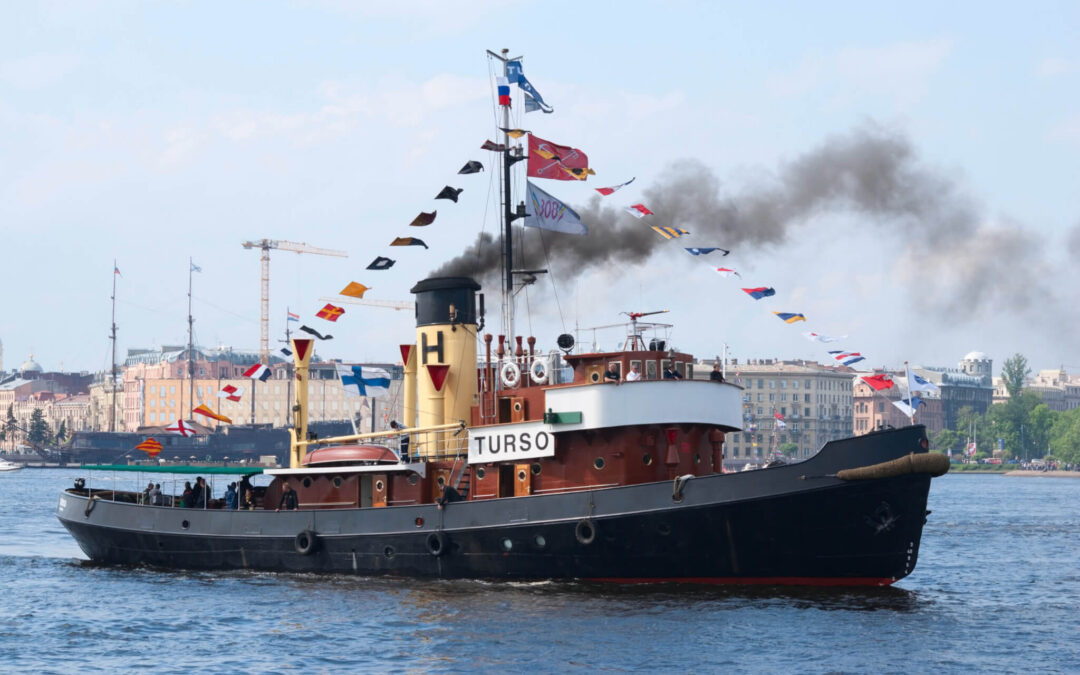
Some people might have begun to notice a theme about May and its holidays–and that is that many of them are centered on getting back out and into the world. With the warming sun and halting rains, should anyone be the least bit surprised?
Even so, while National Maritime Day is not necessarily about the ocean at large, it is more about those men and women who spend their lives working on and around it.
This day specifically focuses on the safety, security, and all the little elements that make up the lives of those on the sea, as well as a little bit of remembrance for how much people have to thank them for!
How to Celebrate National Maritime Day
Make a Visit to the Coast
One perfect way to celebrate and honor this day is to get out to the oceans or seas by gaining access through the bays and the ports. Take a look at the ships coming and going, watch the boats going through the harbor, and perhaps even get up close to take a tour of one, if possible!
Take the time to go out and marvel at the ships and the huge dinosaur like cranes that hulk over the docks transporting cargo containers from shore to ship and ship to shore as they help make the world’s economy turn.
Check Out a Maritime Museum
While visiting a harbor or port, check to see if there is a Maritime museum nearby that can be easily accessed. These museums can offer a wealth of information that allows for learning about the sea and maritime issues. See what has been wrought and how things have changed over the years.
Learn about the regulations that people and boats have to follow and how maritime safety has been a constant and evolving concern–and still remains one of the most dangerous jobs in the world.
Some of the world’s most popular Maritime museums include:
- National Maritime Museum, London, United Kingdom. Also called the Greenwich Maritime Museum, this one has been open since the 1930s.
- Sydney Maritime Museum, Sydney, Australia. This fairly modern museum has been working for more than 20 years.
- San Diego Maritime Museum, California, USA. In addition to visiting, people can participate in recreational and educational courses throughout the year.
- Kobe Maritime Museum, Kobe, Japan. Built on one of Japan’s most important ports, this museum integrates Japanese maritime history with the influence of modern technology.
Read Some Books About Sea Life
National Maritime Day is the perfect time to get started on learning more about the lives of sailors and people of the sea. Traditionally, in the past the people living on the sea were mostly men, although some ships did allow women on board (or, in some cases, they snuck on board dressed as boys).
Try reading some of these fictional stories of the men (and a few women) who have had sea-faring adventures:
- Moby Dick by Herman Melville. This classic piece of fiction was published in London in 1851 and hails the famous first line “Call me Ishmael”, one of the most recognizable lines in classic Western literature.
- Seafaring Women: Adventures of Pirate Queens, Female Stowaways, and Sailors’ Wives by David Cordingly. Chronicling the various numbers of women who went to sea, this non-fiction historical narrative is surprising and delightful.
- The Old Man and The Sea by Ernest Hemingway. Telling the battle of a Cuban fisherman against a marlin, this fictional short story was published in the US in 1952 and is well loved as it echoes the struggles of the human condition.
- Shōgun by James Clavell. The first of novels in this series, Shōgun is based on actual events encountered by and English Sailor whose ship was blown ashore in Japan around 1600, giving a unique Western perspective on life in the Orient at the time.
National Maritime Day isn’t a day for being inside, it’s a day for going out and exploring this important part of the world’s past, present, and future. National Maritime Day – To The Docks!
The Global Impact and Power of Maritime Shipping
Maritime shipping plays a vital role in connecting the world, driving economies, and supporting international trade. From the movement of goods across oceans to the laws that govern the seas, these facts reveal how shipping shapes global systems and influences everyday life.
-
Maritime Shipping Moves About 80% of World Trade by Volume
Commercial shipping is the backbone of global trade, carrying around 80 percent of the world’s merchandise by volume and roughly 70 percent by value.
The share is even higher for many developing countries, which depend heavily on sea transport for both imports and exports, making maritime routes and port infrastructure central to their economic stability and growth.
-
The Titanic Disaster Triggered the First Global Safety Convention at Sea
The 1912 sinking of the RMS Titanic led directly to the first International Convention for the Safety of Life at Sea (SOLAS) in 1914, which established requirements such as sufficient lifeboats, continuous radio watches, and regular lifeboat drills.
Updated multiple times since, SOLAS remains the most important international treaty governing merchant ship safety worldwide and is administered by the International Maritime Organization.
-
A Single Large Container Ship Can Match the Capacity of a Long Freight Train
Modern ultra-large container vessels can carry more than 24,000 twenty-foot equivalent units (TEUs), which is roughly comparable to the load of a freight train over 40 miles long.
The introduction of standardized containers and specialized ships in the mid‑20th century revolutionized global logistics by slashing cargo handling time in ports and sharply reducing shipping costs compared with traditional break-bulk cargo.
-
International Maritime Law Treats the High Seas as a Global Commons
Under the United Nations Convention on the Law of the Sea (UNCLOS), the high seas are not under the sovereignty of any state and are reserved for peaceful purposes, with freedoms that include navigation, overflight, and laying submarine cables.
Coastal states retain certain rights, such as enforcement in their exclusive economic zones, but the overall framework treats much of the ocean as a shared international space that must be governed cooperatively.
-
Shipping Produces Nearly 3% of Global Greenhouse Gas Emissions
International shipping accounts for about 2.9 percent of global anthropogenic greenhouse gas emissions, mostly from burning heavy fuel oil, and could rise significantly if left unchecked.
In response, the International Maritime Organization has adopted mandatory energy-efficiency standards for new ships and aims to reduce total annual greenhouse gas emissions from international shipping by at least 20 percent by 2030 compared with 2008 levels, with even more ambitious reductions targeted by mid‑century.
-
Ballast Water Has Spread Hundreds of Invasive Marine Species
To maintain stability, ships take on ballast water in one port and discharge it in another, inadvertently transporting marine organisms across oceans.
This practice has introduced hundreds of invasive species, such as zebra mussels in North America’s Great Lakes, prompting the adoption of the Ballast Water Management Convention, which requires ships to treat or manage ballast water to minimize ecological damage.
-
Seafarers Work in One of the Most Hazardous Global Professions
Despite modern technology, commercial seafaring remains a high-risk occupation, with long periods away from home, exposure to extreme weather, and potential piracy or armed robbery in certain regions.
The International Labour Organization’s Maritime Labour Convention, often called the “seafarers’ bill of rights,” sets minimum standards on issues such as working hours, medical care, repatriation, and living conditions on board in an effort to improve safety and welfare for crews worldwide.
History of National Maritime Day
A great way to start with this day is by understanding exactly what maritime is. To begin with, maritime transport and work has been important since the human race first put something that floats in the water and decided to use it to get somewhere or do something.
National Maritime Day commemorates the sea, the people of the sea, and the incredible effect it has had on the lives and well-being of humankind. Just to start with the most basic point about it, sea trade has been the largest carrier of cargo in the history of the world. In fact, even the land-bound parts of the Silk Road didn’t see as much cargo and trade-goods moving along it as the oceans and seas have.
Of course, when it comes to the sea, the wind is an ever-present companion, the water buoyant and the siren-call of days at sea are strong in everyone nearby. But the one thing that may be a bit of a weakness for water-transport is the fact that items need to be delivered in a timely manner. While the system is and always has been fairly reliable, it certainly is not fast, at least not by today’s modern standards.
So for those who know someone who has worked in the sea trade or still does, National Maritime Day is the perfect day to take a moment to thank them for all they have done, and let them tell stories about their time on the salty black seas.
National Maritime Day Timeline
-
Seafaring boats are used
The oldest discovered hulled boat that is for seafaring dates back to the Late Bronze Age. Evidence has been in a shipwreck off the coast of Turkey.
-
Maritime Silk Road begins
Before trade on the open seas was common, the Maritime Silk Road used many back routes and channels to make trade possible between Asia, Africa and Europe.
-
Christopher Columbus’ First Voyage
This maritime trip into the new world is the first crossing of the Atlantic that does not use Arctic routes.
-
The Titanic sinks
This most infamous of luxury cruise ships sinks on her maiden voyage between Southampton, England and New York City, USA.
-
USS Nautilus is launched
The world’s first nuclear powered sailing vessel, named after the fictional submarine in Jules Verne’s Twenty Thousand Leagues Under the Sea.