
How to Celebrate National Escargot Day
Enjoying this day is simple — just do various activities that involve appreciating and learning about escargot! Try these or come up with some other creative ideas:
Learn How to Eat Escargot
For some people, ordering a dish of escargot in a restaurant might be intimidating because they may not know how to eat it — and it might not come with special instructions!
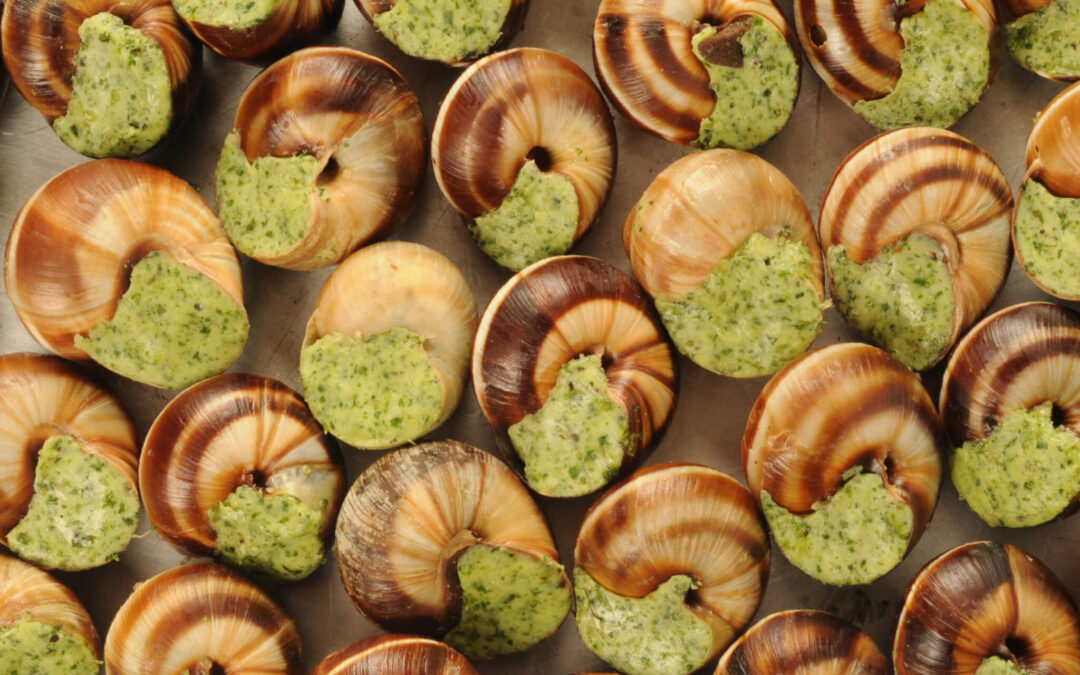
Escargot will likely be served on a special plate that includes divots where the snails are placed in their shells. In addition, the plate will likely be brought with a small snail fork as well as a pair of tongs. But what is a person supposed to do with the equipment?!
Actually, it’s easier than it might seem. Simply use the tongs to pick up one of the snail shells. Reach the small fork into the shell and twist it so that the meat separates from the shell, then pull the meat out.
Since they are such a delicacy, escargot is meant to be eaten slowly and enjoyed. So be sure to savor them just a few small bites at a time!
Order a Meal that Includes Escargot
For many people, the idea of eating snails can be a bit off-putting, but trying them is the only way to figure out if you like them! The best way to do this on National Escargot Day would be to go to a restaurant that serves them, which means they’ll be well-prepared in a traditional manner.
But don’t go alone! Take a friend who likes escargot. That way, if it turns out they aren’t a favorite, the full plate of them won’t go to waste as the friend can still enjoy them!
Share Fun Facts About Escargot
Beyond knowing that they are cooked snails, many people really don’t have any idea what escargot, or National Escargot Day, are all about. Try out these fun facts to help educate the world in their love for this delicacy:
-
Escargot is often served as an appetizer, to be eaten prior to other courses of a full meal.
-
Apicius, who was the author of the world’s oldest surviving cookbooks, has a recipe for snails in this book (aged 1 century BC to 2 century BC).
-
About 1 billions snails are served in restaurants each and every year, and about 40,000 tons of these are consumed by French people, as expected.
-
The scientific realm of growing snails to be used for food is called Heliculture.
Celebrate with Cheesy Snail Jokes
Why not celebrate National Escargot Day with a few different classic snail jokes?
- From the movie Trading Places: a snail buys a sports car and has it sprayed with a massive letter ‘S’, so everyone will see him and say ’Watch that ‘S’ car go.’!
- Why do the French eat snails? They don’t like fast food.
- A man opened a snail farm. His only complaint is that the business is slow-moving.
- How do snails keep in touch? By using their shell phones.
Take a Trip to France
Of course, most French people would agree that the best place in the world to enjoy National Escargot Day is France! So, hop on a plane or train and buzz on over to Paris or another French city to have the best snail-eating experience possible.
Many restaurants in the country work to keep traditional recipes alive for this delicacy. But just about any restaurant found in Paris will have these on their menu as an appetizer, including local wine bars, bistros, cafes, and brassieres.
Consider one of these Parisian restaurants for a starter of escargot:
- L’Escargot Montorgueil. Considered something of an institution in the city, this historic restaurant has been serving famous people (such as Marcel Proust and Salvador Dali) since 1832 in the Les Halles district.
- Au Doux Raisin. For a place that’s less unassuming (and less expensive) this wine bar is reminiscent of the 1950’s era, offering delicious escargot with only customary, fresh ingredients.
- Le Maison de l’Escargot. Another classically known place in Paris, this takeaway place is perfect for stocking a picnic of homemade escargot to be eaten anywhere in the city. Garlic butter is the main vibe, and the takeaway aspect makes this place a whole lot more affordable.
While in Paris, don’t forget to enjoy some of the usual tourist attractions such as the Eiffel Tower, The Louvre (world’s largest art museum), the Arc de Triomphe, Notre Dame Cathedral. And grab some macarons to eat along the way while waiting for Paris to light up at night!
Be Safe with Escargot
Escargot is a delicacy that can be fairly expensive when ordered in a restaurant because the snails are grown on special farms. It’s a fairly long and involved process to get them ready to cook and eat, making them a pricey item on the menu.
Although people who find huge snails in their backyards or while hiking may think that these would make a fine meal and could save a little money, don’t try it! Snails that live in the wild can be extremely dangerous to eat.
Because they tend to eat just about anything they come across (including things that could be toxic to humans), the contents of their stomachs can cause illness if they are consumed.
Snails that are served in restaurants are fed a special diet that usually includes mostly cereals, to be sure that they are then safe for people to eat.
So forget the wildlife barbecue and stick to sourcing snails from a reputable place, whether a restaurant or gourmet grocer.
National Escargot Day Timeline
-
Prehistoric Snail Feasts
Archaeological sites in the Iberian Peninsula, such as the rock shelter of Cova de l’Or in Spain, show large accumulations of roasted snail shells, indicating that prehistoric hunter‑gatherers systematically collected and ate land snails.
-
Roman Gourmet Snail Farming
The Roman gourmet Apicius describes recipes for snails in “De re coquinaria,” while authors like Varro and Pliny the Elder mention specially built snail parks (cochlearia), showing that Romans practiced organized heliciculture and considered snails a recognized food.
-
Snails in Medieval European Cuisine
Medieval European cookbooks, such as the “Libellus de arte coquinaria,” include instructions for preparing snails, reflecting their status as an accepted Lenten and fasting food because they were not classified as meat in many Christian dietary traditions.
-
Rise of Escargots à la Bourguignonne in Paris
According to culinary historians, the chef at the Café Français in Paris popularizes snails cooked in garlic‑parsley butter, known as escargots à la Bourguignonne, when serving them to Talleyrand and Czar Alexander I, helping establish the dish as a French delicacy.
-
Helix pomatia Becomes the “Burgundy Snail”
By the mid‑19th century, French gastronomic writers consistently praised Helix pomatia, gathered in Burgundy and neighboring regions, as the premier escargot species, cementing its association with classic French snail dishes.
-
French Regulation of Wild Snail Harvesting
Facing declines in wild Burgundy snail populations, France introduces regulations restricting collection periods and sizes, a move that encourages the shift toward farmed snails and formalizes heliciculture as an agricultural activity.
-
Modern Heliculture and Global Trade Expand
Commercial snail farming spreads through Europe and beyond, with FAO reports noting rising production in countries such as France, Italy, Greece, and Eastern Europe, and international trade figures showing millions of kilograms of snails exported annually for food.