
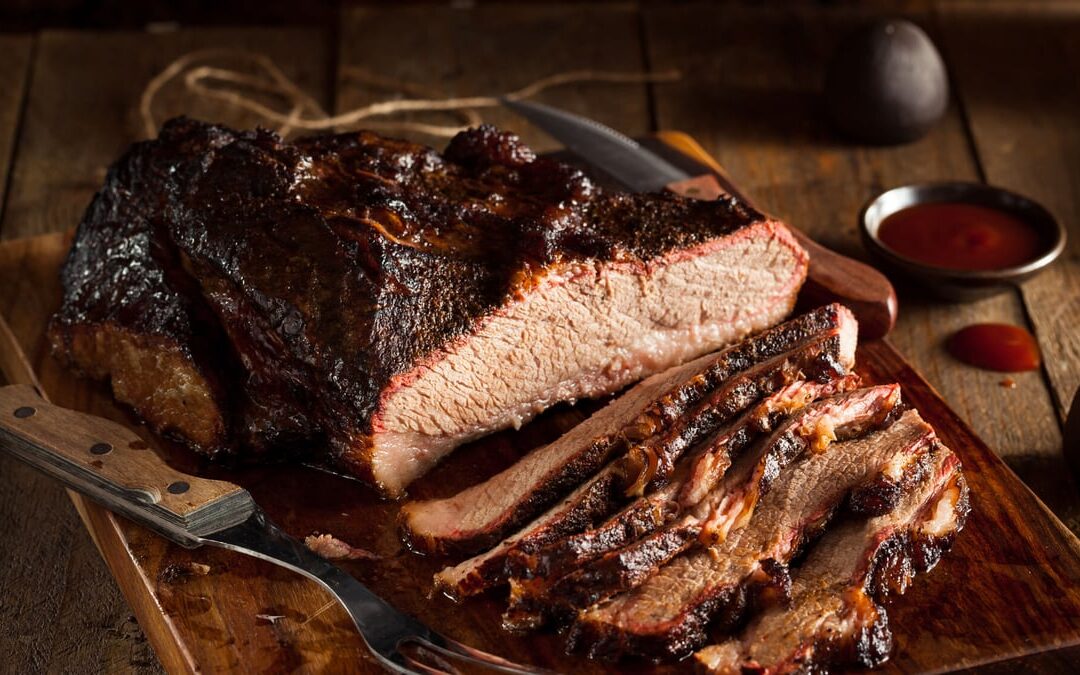
Learn More About Brisket
Some things take time, and a good brisket is one of these. Brisket is a popular cut of meat to serve as part of any family affair, and it’s long cooking time ensures that it is a big hit when those who know how to prepare it.
Brisket is a tricky meat in that it comes from the animal tough, but if you find a particularly well-marbled piece and cook it correctly, it will become fork soft and simply peel apart, making it the tenderest of tender meats.
Of course, there are hundreds of variations on how to prepare brisket, including the use of various hardwoods in the grilling process to ensure a nice smoky flavor. Some people marinate them, some don’t, and many like to serve it with a sauce.
National Brisket Day Timeline
-
“Brisket” Enters the English Language
The word “brisket” appears in Middle English, likely derived from Old Norse “brjósk” (gristle), referring to the tough, cartilaginous breast of the cow that requires long, slow cooking to become tender.
-
Ashkenazi Jews Develop Holiday Brisket
Ashkenazi Jewish cooks in Central and Eastern Europe began braising the tough breast of beef as a Sabbath and festival dish, a technique later brought to North America and now central to Jewish holiday meals.
-
Corned Beef Brisket Becomes an Irish-American Staple
In the United States, Irish immigrants adopt inexpensive brisket from Jewish butchers for “corned beef and cabbage,” a dish that evolves into a popular centerpiece of Irish-American celebrations such as St. Patrick’s Day.
-
Texas Meat Markets Begin Smoking Brisket
German and Czech immigrants in Texas open meat markets and begin slow-smoking the cheap, fatty brisket over post oak and other woods, laying the foundation of what becomes iconic Central Texas–style barbecue.
-
Brisket Anchors Jewish-American Pot Roast Traditions
With increased Jewish immigration to the United States, braised brisket emerges as a signature American Jewish comfort food, especially for Passover and Rosh Hashanah, thanks to its affordability, flavor, and ability to be cooked in advance.
-
Pho Bo Popularizes Brisket in Vietnamese Cuisine
As beef consumption expands in Vietnam, brisket becomes a key cut in pho bo, simmered for hours to enrich the broth, and later spreads globally with the rise of Vietnamese restaurants after the Vietnam War.
-
Competition Barbecue Elevates Brisket Worldwide
American barbecue competitions and television shows spotlight smoked brisket as the ultimate “pitmaster” challenge, helping spread Texas-style techniques and turning this once-overlooked cut into an international culinary star.
History of National Brisket Day
The history of brisket dates back to ancient history – practically ever since humans reared cattle. People would sacrifice their animals on special occasions and eat every part of the animal, including the brisket cut. Texas BBQ brisket is one of the most popular ways to prepare it. Here, chefs marinate the meat for between 24 and 48 and cook it in a unique wood or charcoal-fired BBQ oven.
Careless cooking often resulted in tough meat, so people developed techniques to get the most out of the cut. After all, if you could make brisket taste good, it was a great way to get delicious and cheap meat.
In the old days, you couldn’t store meat in a refrigerator. The technology simply didn’t exist. After 48 hours following the death of the animal, the carcass would begin to turn, meaning that the butcher had to cook and eat it fast.
Friday evenings, therefore, became the traditional day on which people would cook up the remaining cuts of meat uneaten and unsold throughout the week. People found that barbecuing meat and adding marinades and sauces provided the best flavor. And so the rationale for holding National Brisket Day celebrations was born.
National Brisket Day is also heavily associated with smoked meats – not just brisket. Again, butchers had to use smoking to preserve meat so that it wouldn’t go off.
For that reason, they took cuts of meat, such as rib-eye or tenderloin, and put them in smoke sheds. This process killed off all the bacteria and created compounds that would inhibit the growth of harmful bugs in the future.