
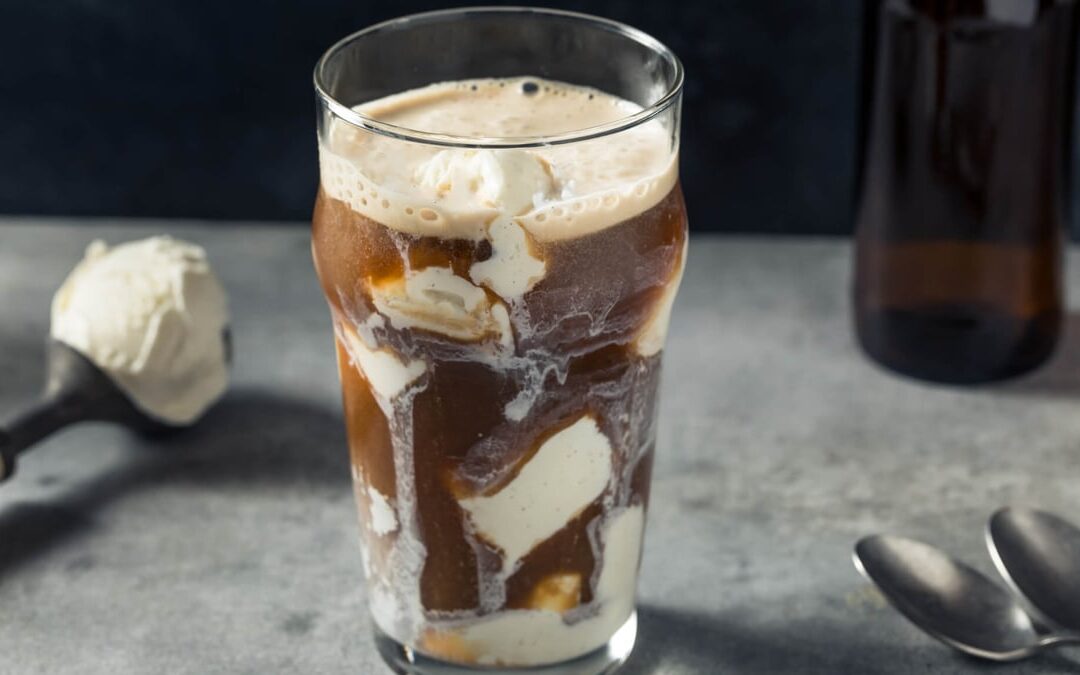
While it may sound like a celebration of a certain color of cattle, National Black Cow Day is really devoted to something much frothier. A “black cow” is a long-running nickname for a root beer float, the fizzy dessert drink made by combining root beer with vanilla ice cream. It is equal parts snack and nostalgia, and it still manages to feel special even though it requires only a couple of ingredients and a glass tall enough to handle the foam.
Part of the charm is how a black cow changes as it sits. The first sip is bright and bubbly, with a sharp root beer bite. A few minutes later, the ice cream softens and the drink turns silky, almost like a milkshake that still remembers it used to be soda. National Black Cow Day leans into that simple pleasure and gives people an excuse to make one on purpose, not just as a spur-of-the-moment treat.
How to Celebrate National Black Cow Day
Celebrate National Black Cow Day with several different ideas, including some of these:
Enjoy a Black Cow
Certainly, the best idea for getting the most out of National Black Cow Day is to take some time to enjoy a root beer float. The beauty of a black cow is that it is both easy and surprisingly “crafted” when made with care. A great one has three things in balance: cold, carbonation, and creaminess.
Start with the root beer. Many people have a strong preference here because root beer can lean in different directions depending on the brand or recipe. Some are heavier on vanilla and wintergreen, some taste more herbal and spicy, and others are sweeter and milder.
Choosing a root beer that is very cold helps keep the foam under control and keeps the ice cream from melting too quickly. A chilled mug or glass also makes a noticeable difference. For extra chill factor, some people like to keep glasses in the freezer so the float stays crisp longer.
Then there is the ice cream. Vanilla is traditional because it melts into the root beer without overpowering it, creating that creamy “root beer milk” flavor that shows up as the float settles. A dense, high-quality vanilla ice cream tends to form thicker ribbons as it melts, while a lighter ice cream disappears faster and makes the drink sweeter more quickly.
Both can be delicious, but they produce different experiences. For a more old-school soda-fountain feel, scooping firm ice cream into a tall glass and letting the root beer flow slowly down the side helps build a foamy head without immediately blasting the ice cream into a slushy.
Even the pour matters. A gentle pour down the inside of the glass reduces runaway foam and gives the ice cream time to float upward rather than break apart. Some people like to add a splash of root beer first, add the scoops, then finish with the rest of the root beer.
That method helps “seat” the ice cream and gives more control. A long spoon is helpful for capturing the melty, creamy foam at the top, which is arguably one of the best parts.
It can be fun to serve black cows in different styles to see how small choices change the experience. A wide-mouth mug creates a thick cap of foam and makes it easy to scoop. A tall, narrow glass keeps the bubbles lively and gives that classic striped look as the ice cream melts. Some people swear by using a paper straw for the old-time feel, while others skip the straw entirely and treat it like a dessert to be eaten and sipped.
For those who like variations but still want to keep the spirit of the black cow intact, a few tweaks can change the whole personality of the drink:
- Swap the ice cream flavor while keeping root beer. Chocolate, caramel, or coffee ice cream can create a richer, more dessert-forward float.
- Switch the soda while keeping vanilla. Cream soda, cola, or orange soda floats have their own fan clubs, even if they are not technically “black cows.”
- Add a topping. A small dollop of whipped cream, a drizzle of chocolate syrup, or a sprinkle of cinnamon can make the float feel like a sundae in a glass.
The “right” version is the one that makes people pause after the first sip and think, “Oh, that’s why this is a thing.”
Host a National Black Cow Day Party
Invite the whole gang over for a casual get-together on National Black Cow Day and have the guest of honor be the black cow. Because floats are part drink and part dessert, they fit nicely into an easy gathering. They are also interactive. Guests can choose their own ice cream, add-ins, and toppings, and the results range from neat and classic to wonderfully chaotic.
Of course, root beer floats are the most important part of the menu, so be sure to have plenty of root beer and vanilla ice cream available. It helps to plan like a soda jerk. Keep the root beer cold, keep the ice cream very firm, and have enough tall glasses, spoons, and straws for everyone. Wide straws work better than skinny ones because they can handle the creamy foam and little ice cream bits.
A simple float bar can make hosting easier. Set out:
- Several chilled sodas (including classic root beer as the star)
- A few ice cream options (vanilla for tradition, plus a wildcard flavor or two)
- Toppings in small bowls (chocolate sauce, caramel, crushed cookies, chopped nuts, sprinkles)
- Optional extras (maraschino cherries, whipped cream, cinnamon, flaky salt for the adventurous)
For a party with kids, pre-scooping ice cream into small bowls and keeping them in the freezer can reduce the wait time and keep the line moving. For a party with adults, offering a taste test of different root beers can be a surprisingly fun activity. People discover quickly that they can identify favorites based on spice, sweetness, or vanilla notes, even if they never thought about root beer that way before.
In addition, it might be fun to play up both meanings of the name of the day, which means it’s possible to decorate cookies and cupcakes with cow-themed designs. Black-and-white frosting, candy “spots,” or simple cow-face decorations turn the pun into a theme without taking over the whole event. Even paper napkins or table décor in black-and-white patterns can nod to the name while keeping the focus on the float.
To keep the menu friendly for different preferences, pair black cows with salty, shareable foods that feel diner-adjacent. Fries, onion rings, popcorn, pretzels, grilled corn, or a build-your-own burger setup can all work well, including plant-based options. The sweet-and-salty contrast makes the float taste even better, and it helps the drink feel like a complete treat rather than a sugar rush on its own.
For a little friendly competition, guests can vote on categories like “best foam mustache,” “most creative combo,” or “most classic black cow.” It is a low-effort way to get people laughing, and it fits the spirit of a dessert that is supposed to be slightly messy. Just keep napkins nearby and accept that a truly enthusiastic pour usually comes with a little overflow.
National Black Cow Day Timeline
-
Hires Root Beer Debuts Publicly
Philadelphia pharmacist Charles Elmer Hires introduces his “root tea” as Hires Root Beer at the 1876 Centennial Exposition, helping popularize root-flavored soft drinks that later became the base for root beer floats.
-
Root Beer Float Attributed to Frank J. Wisner
Colorado businessman Frank J. Wisner reportedly created the first root beer float in Cripple Creek by topping vanilla ice cream with root beer, a combination that soon became known regionally as a “black cow.”
-
Ice Cream Soda Spreads in American Soda Fountains
By the end of the 19th century, ice cream sodas had become a popular attraction in drugstore soda fountains across the United States, pairing carbonated soft drinks like root beer with ice cream in treats similar to the black cow.
-
Root Beer Floats Featured at the St. Louis World’s Fair
Vendors at the St. Louis World’s Fair sell ice cream sodas and floats, including root beer versions, helping to cement the float as a quintessential American fair and soda fountain treat.
-
A&W Root Beer Begins at a California Stand
Roy W. Allen started selling a new draft root beer in Lodi, California, later joined by Frank Wright as A&W; the growing chain eventually turned the root beer float into one of its signature menu items.
-
Soda Fountains Become Social Hubs
During the interwar years, soda fountains attached to pharmacies emerged as popular hangouts for teenagers and families, with ice cream sodas and root beer floats serving as iconic, inexpensive indulgences.
-
Diners and Drive-ins Keep the Float Tradition Alive
Postwar car culture and the rise of diners and drive-ins ensured that root beer floats remained a staple of casual American eating, reinforcing their association with nostalgia, summer, and classic Americana.
History of National Black Cow Day
It seems that the black cow has been around for more than a century. One popular origin story places the drink’s beginnings in the late 1800s and credits Frank J. Wisner with serving a dark soda topped with vanilla ice cream after being inspired by a mountain view.
Whether every detail of that tale is perfectly preserved or not, it captures something true about the era that produced the black cow: this was the golden age of the soda fountain, when new drinks were invented by curiosity, showmanship, and a desire to turn simple ingredients into something memorable.
Soda fountains once served as a kind of community counter. People stopped in for carbonated drinks, sweet syrups, and ice cream, and the person behind the counter often mixed orders with the confidence of someone who had done it a thousand times.
Adding ice cream to soda was not only delicious, it also felt a bit like alchemy. The bubbles lifted the ice cream, the ice cream softened the sharpness of the soda, and the whole glass turned into a moving, foaming dessert.
The name “black cow” itself carries a playful logic. Root beer is dark, and the scoop of vanilla floating on top can resemble a pale cap. In a tall glass, the contrast is dramatic: dark soda below, creamy foam above, and melting swirls in between.
Over time, “root beer float” became the clearer, more literal name for the drink, but “black cow” remained in circulation as a nickname in certain places and families, the sort of term that gets passed along because it sounds funny and feels old-fashioned in the best way.
Like many beloved food traditions, the black cow also picked up variations as it traveled. Some people use “black cow” to mean root beer with vanilla ice cream specifically. Others use the name more loosely for any float, while still others reserve it for a particular style of float served in a frosty mug. That flexibility is part of why the drink has lasted. It is instantly recognizable but easy to make personal.
The black cow’s endurance also comes from the way it fits different moments. It can be an after-school treat, a simple dessert at the end of a meal, or a special addition to a celebration. It is easy to assemble for one person and just as easy to scale for a crowd. It asks for no special equipment, no baking, and no waiting time beyond the few minutes it takes the foam to settle.
It also offers built-in drama. A float looks like something is happening even before the first sip. The foam rises, the ice cream bobbles, and the root beer fizzes around the edges like it is impatient to be tasted. Then the drink evolves in stages.
First there is crisp carbonation, then a creamy middle phase, and finally the last sips, which are often more like a melted milkshake with a hint of spice from the root beer. The melting is not a mistake. It is the design.
National Black Cow Day exists to celebrate this classic combination and the small joy it brings. It highlights the appeal of uncomplicated treats, the kind that can be made from everyday groceries yet still feel like a reward. In a world full of complicated desserts and limited-time flavors, the black cow stays steady: a cold scoop, a fizzy pour, and a few minutes of sweet, creamy nostalgia in a glass.
Facts about National Black Cow Day
-
Root Beer Began as a Homemade Medicinal Tonic
Root beer started out in colonial North America as a homemade “small beer,” brewed from roots, barks, and herbs like sassafras, wintergreen, and sarsaparilla, and was often promoted as a mildly fermented health tonic rather than a dessert drink.
Commercial recipes were later reformulated after the U.S. Food and Drug Administration restricted safrole, a carcinogenic compound in natural sassafras oil, which pushed manufacturers to rely on artificial or safrole-free flavorings while keeping the familiar taste.
-
The Classic Soda Fountain Ice Cream Soda Predates the Float
The ice cream soda that paved the way for root beer floats first appeared in American soda fountains in the 1870s and 1880s, when druggists began adding a scoop of ice cream to flavored carbonated water to boost sales and excitement.
These concoctions grew so popular that some churches and towns briefly restricted them on Sundays, claiming they were too indulgent for the Sabbath, which in turn helped inspire the “ice cream sundae” as a non-carbonated workaround.
-
Why Root Beer Floats Foam So Dramatically
The towering foam in a root beer float comes from a combination of carbonation physics and ice cream chemistry: carbon dioxide in the soda rushes out of solution when it hits the rough, cold surface of the ice cream, while the proteins and fats in the ice cream act as stabilizers that trap bubbles into a long-lasting froth.
Because root beer formulas often contain natural gums and emulsifiers, they can form an unusually thick, persistent head compared with many other sodas when mixed with ice cream.
-
Sassafras Flavor Survived a Federal Ban
For decades, the distinct flavor of early root beer depended heavily on sassafras, a tree whose roots and bark were also brewed in traditional teas, but in 1960, the U.S. FDA banned safrole-containing sassafras oil from food due to animal studies linking it to liver cancer.
Beverage makers responded by adopting safrole-free sassafras extracts and synthetic flavor blends, which allowed them to preserve the nostalgic flavor profile of root beer and floats without using the banned compound.
-
Soda Fountains Turned Pharmacies into Social Hubs
Late 19th- and early 20th-century American drugstores often installed ornate soda fountains that dispensed carbonated drinks and ice cream treats, transforming pharmacies from purely medical suppliers into bustling social centers.
By the 1920s, these counters were known as respectable places for young people to gather, and “soda jerks” became minor celebrities for their showy preparation of ice cream sodas and floats that blended entertainment with refreshment.
-
Prohibition Gave Sweet Sodas and Floats a Boost
When national Prohibition took effect in the United States in 1920, many people who had previously frequented saloons turned to alcohol-free options such as soda fountains for social drinking, helping to entrench sugary carbonated beverages and ice cream concoctions in mainstream culture.
Breweries and taverns repurposed their equipment to make soft drinks and near beer, and sweet treats like ice cream sodas and floats offered a legal indulgence that partly filled the gap left by banned alcoholic drinks.
-
“Black Cow” Has Also Meant Different Drinks Over Time
The name “black cow” has not always meant just one recipe; in some regions and eras, it referred specifically to a root beer float, while in others it meant cola with ice cream or even a chocolate-flavored ice cream soda. Early 20th-century soda fountain manuals and regional menus show that the term shifted according to local custom, which is why historically minded recipe collectors often have to clarify whether a “black cow” used root beer, cola, or chocolate syrup.